
Floating Wetlands: Nature Heals Water Ecosystems

Table of Contents
- Let’s be real. Lakes and rivers have been treated like garbage - and it shows. We’re finally learning to mimic nature and harness nature's own power to heal ...
- The Bio-Island Revolution: A Floating Wetlands Uprising
- How Nature’s Slime Saves the Day
- Roots Do The Work - Image Credit Wikimedia Commons
- The Anatomy of a Floating Wetland
- Real World Healing: From Disasters to Destinations
- Top 5 Places Where Nature is Winning the Fight
- Nature Wins
- Why Floating Wetlands Are the Future
- A New Chapter for an Abused Earth
- A Deeper Look At The Issue - Video
Let’s be real. Lakes and rivers have been treated like garbage - and it shows. We’re finally learning to mimic nature and harness nature's own power to heal ...
Better late than never, we are seeing real evidence that nature, in the form of floating wetlands and bioremediation can heal nature and that humans can mimic natural processes.
Floating wetlands are one of many emerging eco-technologies under the banner of bioremediation. People are learning in realtime that the use of natural life, like naturally occurring plants, marshes, mushrooms, biochar or added microorganisms will eat, break down, and remove pollution so contaminated water and contaminated land can heal. Imaging that.
And with over 1343 superfund sites on the Environmental Protection Agency’s National Priorities List, we definitely have lots of work to do. Let us get on with it.
The Bio-Island Revolution: A Floating Wetlands Uprising
Scientists and communities around the world are now realizing that we don’t need to reinvent theedit wheel. The Earth already has the world's best water filter: the Wetland. Think of a wetland like the Earth’s kidneys. It strains out the bad stuff and keeps the good stuff.
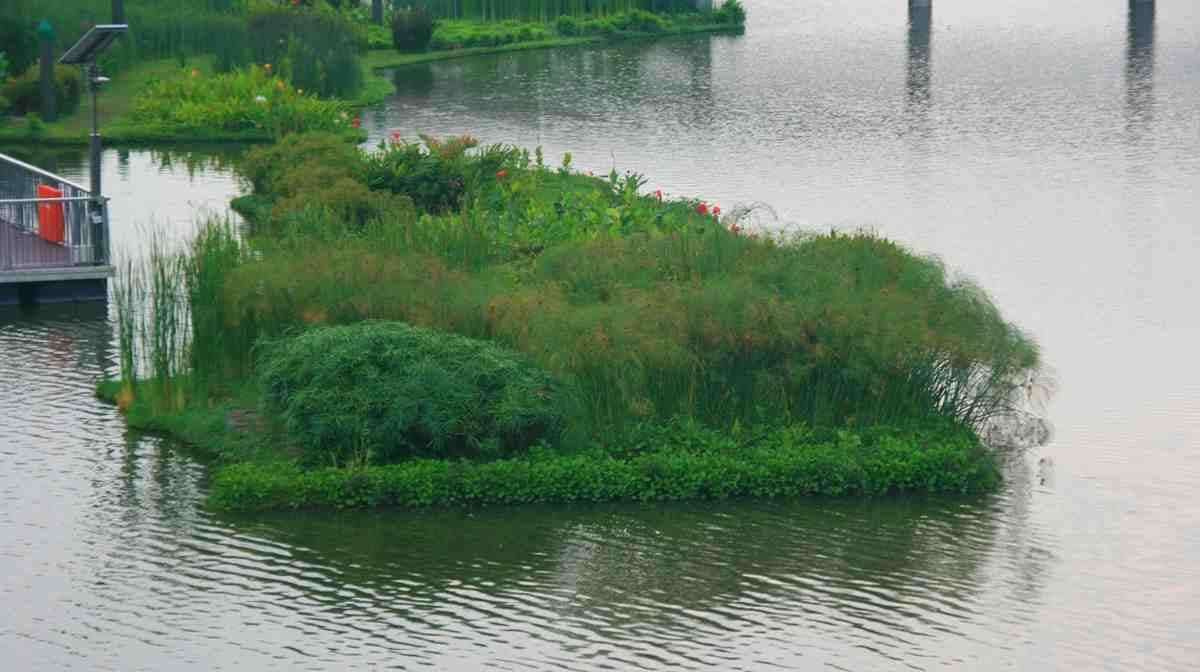 Singapore's Sengkang Floating Wetland - Image Credit Wikimedia Commons
Floating Treatment Wetlands (or "Bio-Islands") are a new technology that copies this natural design. Instead of a science fair project, these are now massive, mainstream tools used to heal the planet. By putting native plants on floating rafts, we are essentially building "mobile kidneys" that can be dropped into any polluted river or lake to accelerate the healing process.
In an article called Floating Islands – Own One Today from the University Of Maryland’s Department Environmental Science and Technology, Dr Joshua McGrath stated …
“Taking advantage of naturally occurring biological processes allows for the creation of a cost effective and low maintenance solution to boost nutrient removal and environmental remediation,”
How Nature’s Slime Saves the Day
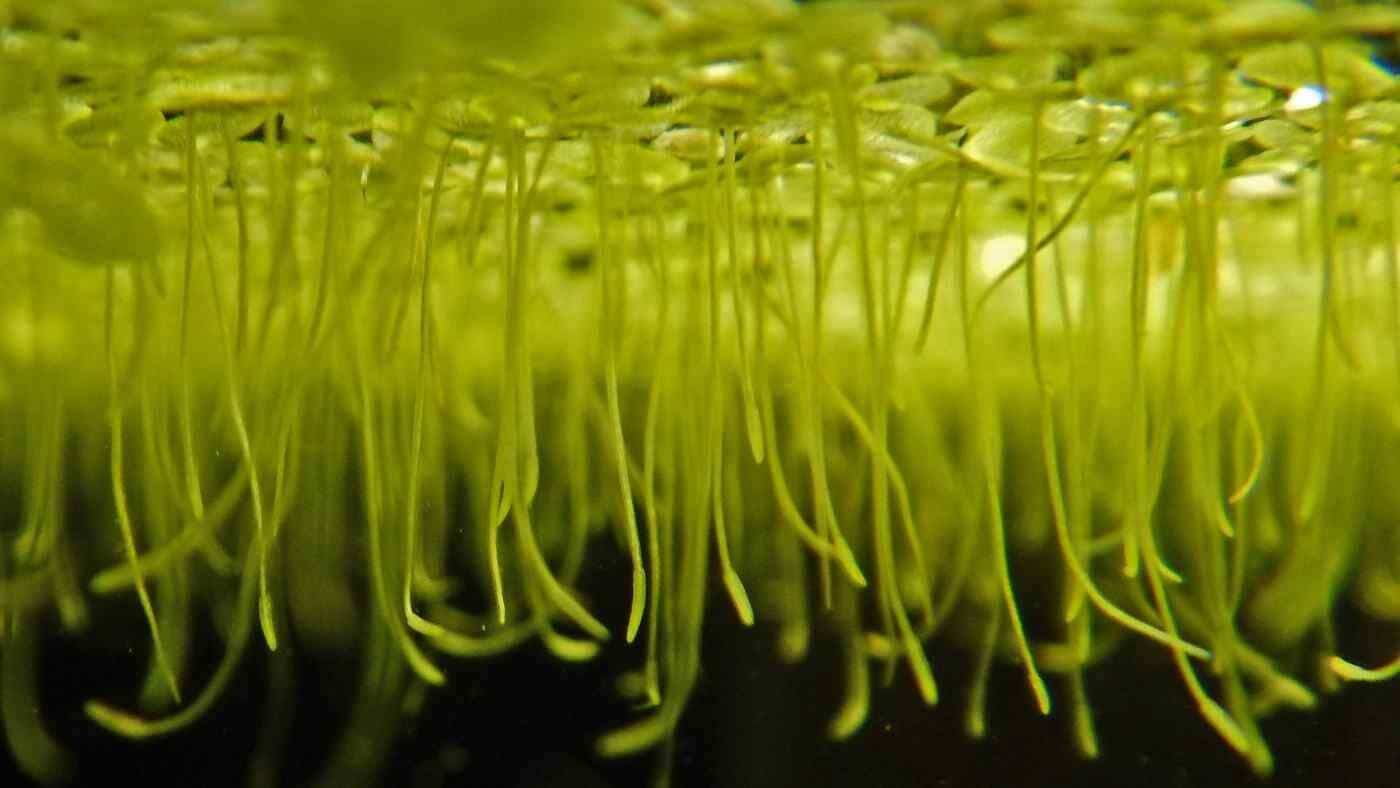
You might think the plants on top of the island are doing all the work, but the real magic happens underwater. As the plants grow, their roots hang down into the water like long, shaggy hair.
On those roots, a tiny world of "friendly" bacteria grows. This is called a biofilm - what we are calling slime - eww - (you can think of it like the slippery stuff on a rock in a stream).
These bacteria are the real superheroes. They actually "eat" the pollution. They can break down complex chemicals, nasty cyanobacteria, industrial heavy metals, and even start to tackle those "forever chemicals" like PFAS
Looks like this slimy bacteria - aka biofilm - made by floating wetlands are really showing up as nature’s superheroes.
In an article in The Guardian article Professor Simon Beecham from the University of South Australia, co-author of a leading study into floating wetlands said the following …
“We have always been taught that solutions need hard engineering – you had a system and you add a process and some chemicals. Adding, we’ve worked out that no matter how hard you engineer something, nature filters everything much better than anything else. Engineers are working out that nature does a pretty good job by itself. If you can use nature, you’ll come out with a more optimal answer.”
In the same Guardian article, environmental engineer and co-author of the Floating Wetland Study Chris Walker also likes the value of the bio-slime. While holding a clump of weeds from a floating wetland he helped construct down under in Caloundra, Australia he says ...
“This is what you want,” “It’s biofilm and it’s taking up all those nutrients and breaking them up.”
 Roots Do The Work - Image Credit Wikimedia Commons
Roots Do The Work - Image Credit Wikimedia CommonsThe Anatomy of a Floating Wetland
Here is how these floating islands work to fix the mess:
- The Raft: A floating platform made of recycled materials that stays on the surface, rising and falling with the tide.
- The Roots: Long, hanging "vacuum cleaners" that reach deep into the water to suck up extra nutrients that cause stinky algae.
- The Biofilm: A thin layer of bacteria on the roots that acts like a tiny chemical processing plant, turning toxins into harmless stuff.
- The Canopy: The green plants on top that provide a home for birds, turtles, dragonflies, butterflies and other living beings.
- The Underwater Forest: A "jungle" of roots where baby fish can hide from predators while the water gets cleaned.
AquaCera Terra2 Handcrafted Cobalt Blue Stoneware Gravity Water Filter System With (2) NanoMetix Filters
$399.95
Water as it should be. Every drop. When every drop you drink is pristine, life feels lighter, healthier, and more alive. And when it is… read more
Real World Healing: From Disasters to Destinations
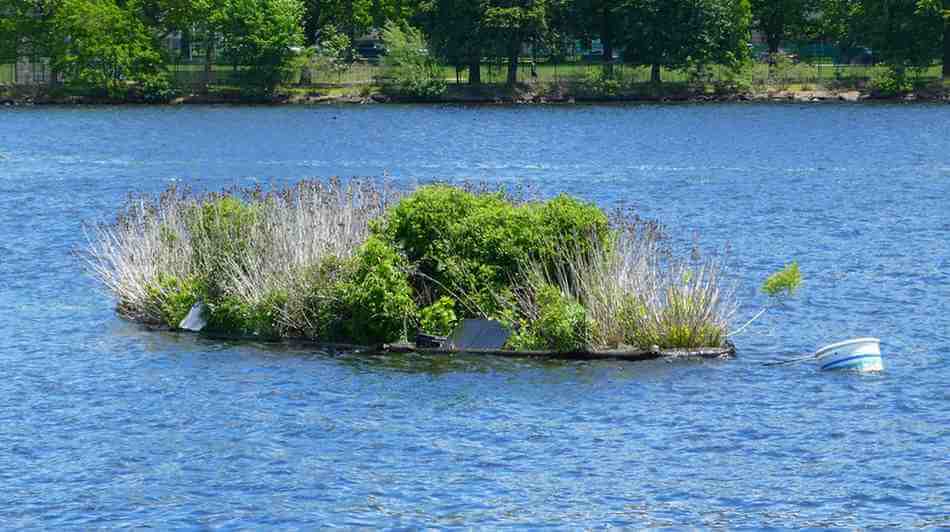
This isn't just a dream; it’s happening right now. In places like the Charles River in Cambridge, MA that was once simply too dirty to touch.
And on the Housatonic River, where those PCBs have caused so much trouble, these nature-mimicking systems can possibly become a key part of the plan - if we can free the science - and move beyond just digging up the river—which can sometimes stir up the poison and make it worse—floating wetlands act as a living shield. They catch the pollution as it moves and use biology to lock it away.
Floating Wetland In The Charles River, Cambridge, MA - Image Credit Wikimedia CommonsTop 5 Places Where Nature is Winning the Fight
Floating wetlands are being used to clean up some of the world's biggest eco-disasters:
- Bindapur, South West Delhi, India - A Phytorid system in Bindapur treats water naturally—no chemicals or power—removing microbes and heavy metals.
- Chicago River (Bubbly Creek), Chicago, IL - Floating islands with native plants are helping clean up water polluted by historical industrial waste.
- The Charles River, Cambridge MA - A 700-sq-ft floating wetland island with native plants, restoring biodiversity and fighting algal blooms.
- Nagdaha Lake, Nepal - Floating wetland systems clean this polluted lake by reducing nitrates, phosphorus, and heavy metals naturally.
- National Aquarium, Baltimore, MD - The National Aquarium uses floating wetlands in Baltimore’s Inner Harbor to restore habitat and improve water health.
Nature Wins
The coolest part? This living technology is actually much smarter and cheaper than the old way of doing things. In 2025, a major study showed that using nature to clean water can save cities billions of dollars.
Instead of building a giant factory that uses tons of electricity and chemicals or instead of building massive toxic dumps, we just let the floating wetlands and bioremediation do the work. It's like having a water treatment plant that grows and mimics nature and heals our ecosystems and industrial pollutants. Instead of digging a hole, to dig another hole to line it with plastic and put cement on top - we can free the science and use floating wetlands and bioremediation.
Why Floating Wetlands Are the Future
- They Are Self-Powered: Floating Wetlands run on 100% natural power: decomposition, nutrient, carbon, and water cycles.
- They Grow Over Time: A machine breaks down with age; a floating wetland grows bigger, stronger, and more effective every year.
- They Fix Our Eco Mistakes: It’s one of the only ways to clean vast polluted areas without causing further environmental damage.
- They Bring Good Things Back To Life: Cleans polluted water through nutrient uptake while creating habitat and restoring urban waterways.
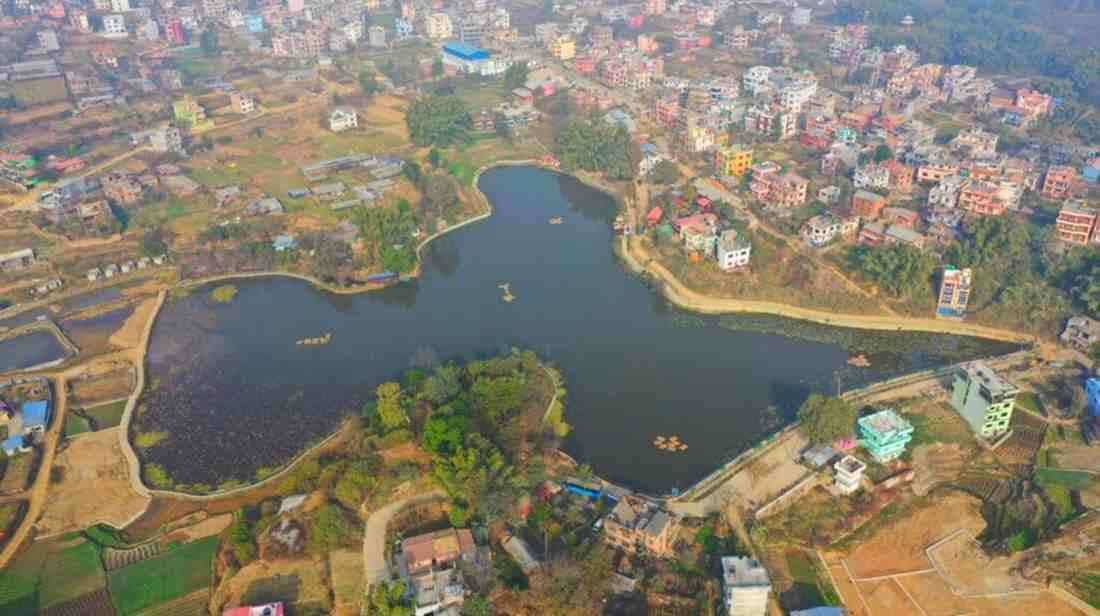 Nagdaha Lake, Nepal - Floating wetlands clean this lake naturally - Image Credit Small Earth Nepal
 A New Chapter for an Abused Earth
We can't go back and change what GE and Monsanto did to the Housatonic River or Hudson River.
We can't prevent the previous poisoning from 3M, Chemours, DuPont, Solvay, BASF, Saint Gobain Daikin, Arkema, Honeywell, AGC, Archroma, Bayer, and Dongyue.
However, we can all choose how we fix it. Floating wetlands and bioremediation can and will be part of the solution.
By using floating wetlands and bioremediation — the science of using life to heal life, we are finally moving from controlling nature and managing pollution to healing the planet. Floating wetlands prove that when we stop fighting nature and start mimicking it, we can turn even the worst man-made disasters into thriving blue and green sanctuaries once again.
According to Dr. John Awad, the lead author of one of the pre-eminant studies on the value of floating wetlands, Dr Awad stated …
“Floating wetlands mimic the functions of natural ecosystems, filtering nutrients and pollutants through plant roots and microbial communities.“A Deeper Look At The Issue - Video
Hear from General Curator Jack Cover about the plants, animals and microhabitats found on and around Baltimore's National Aquarium's floating wetland prototype in the Inner Harbor, a constructed habitat that re-creates all the functions of a real tidal marsh. Also, get a sneak peek of what's to come as we prepare to install more floating wetlands in the water between Piers 3 and 4—and let guests get close and explore!
Related Articles
The HEALING WATER We Lost: The Ancient Science of Balneotherapy
Marta Kovács is 61 years old, a retired school administrator from Budapest, and she has been going...
America’s WATER UPRISING
Emily Marpe was standing in her driveway in Petersburgh, New York, when the health department called. She...
The Post Industrial WATER CRISIS Part 1 - Pittsfield, MA
In the heart of the Berkshires, Pittsfield, Massachusetts stands as both a symbol of American...