
America’s WATER UPRISING

America's water revolt has been growing for a decade.The women who started the mutiny are now mad at the politicians who now promise glyphosate in every water pot, making matters worse ...
Emily Marpe was standing in her driveway in Petersburgh, New York, when the health department called. She had just bought her dream house, the one she called Cloud Nine, the one that had felt, at closing, like an arrival after years of renting and saving. The health inspector told her the water test results. He told her to stop brushing her teeth with it. That day. Immediately.
Her children's blood, when tested, came back with PFAS levels between 100 and 200 parts per billion. Safe is under two. Her own levels were even higher. Emily Marpe exclaimed ...
"My children were violated." That was several years ago. Today, Petersburgh and its neighboring village, Hoosick Falls, have won multimillion-dollar settlements from 3M, Saint-Gobain, Honeywell, and DuPont — the four companies whose manufacturing practices contaminated the region's water with PFAS. They got a new aquifer. They got medical monitoring. They got money. What they didn't get back was time, or the people they lost, or the feeling of safety that once came with turning on a tap.
Emily Marpe's fight, and the fight of communities like hers across America has become the defining H2O story of this decade. But it is no longer only about PFAS. It has expanded: to glyphosate in the fields, to AI servers draining aquifers, to the MAHA political leaders that promised to fix the wet stuff - who then did an about-face - signing off an executive order to poison it faster.
American water is under siege from multiple directions simultaneously. And the water rebellion against that siege is unlike anything the country has seen before.
The Forever Chemical Uprising
PFAS (per- and polyfluoroalkyl substances) are exactly what their nickname implies they are forever chemicals.
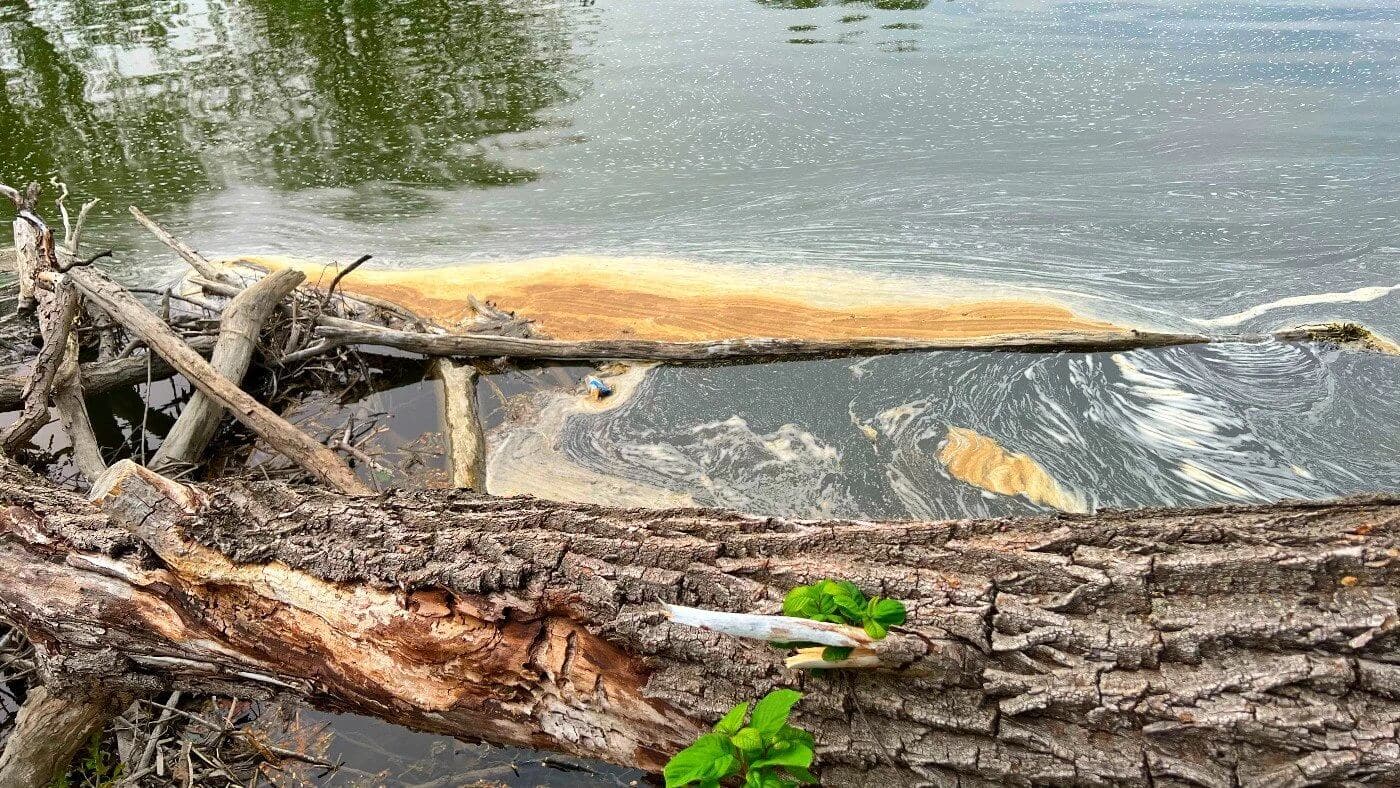 Foam containing PFAS along the shoreline of the Huron River in Michigan / Image Credit Wikimedia
Manufactured since the 1940s for use in Teflon, Scotchgard, firefighting foam, food packaging, and hundreds of other products, PFAS does not break down in the environment. They accumulate in soil, in groundwater, in the human bloodstream. They are now estimated to be present in the bloodstream of at least 97 percent of Americans. The CDC has linked them to kidney cancer, testicular cancer, thyroid disease, ulcerative colitis, and immune disruption.
For decades, the companies that manufactured them knew. Internal 3M documents show a company scientist described PFOS, one type of PFAS, as likely the most insidious pollutant in existence as early as 1999. A DuPont lawyer privately warned that the chemicals' persistence in the environment would "kill us." Both companies continued production. Both companies marketed their products as safe.
What broke the silence was not a government agency. It was a man named Michael Hickey, who got suspicious after his father died of kidney cancer in Hoosick Falls, followed by a local teacher who died in her fifties. Hickey began researching, began testing, began organizing neighbors on Facebook. He and Emily Marpe and others badgered local officials, testified before the state legislature, traveled to Congress. Eight years after they started fighting, they won.
To encourage other towns and to highlight the need for hard work and consistency, Loreen Hackett, a PFAS community activist from Hoosick Falls, NY told The Hill ...
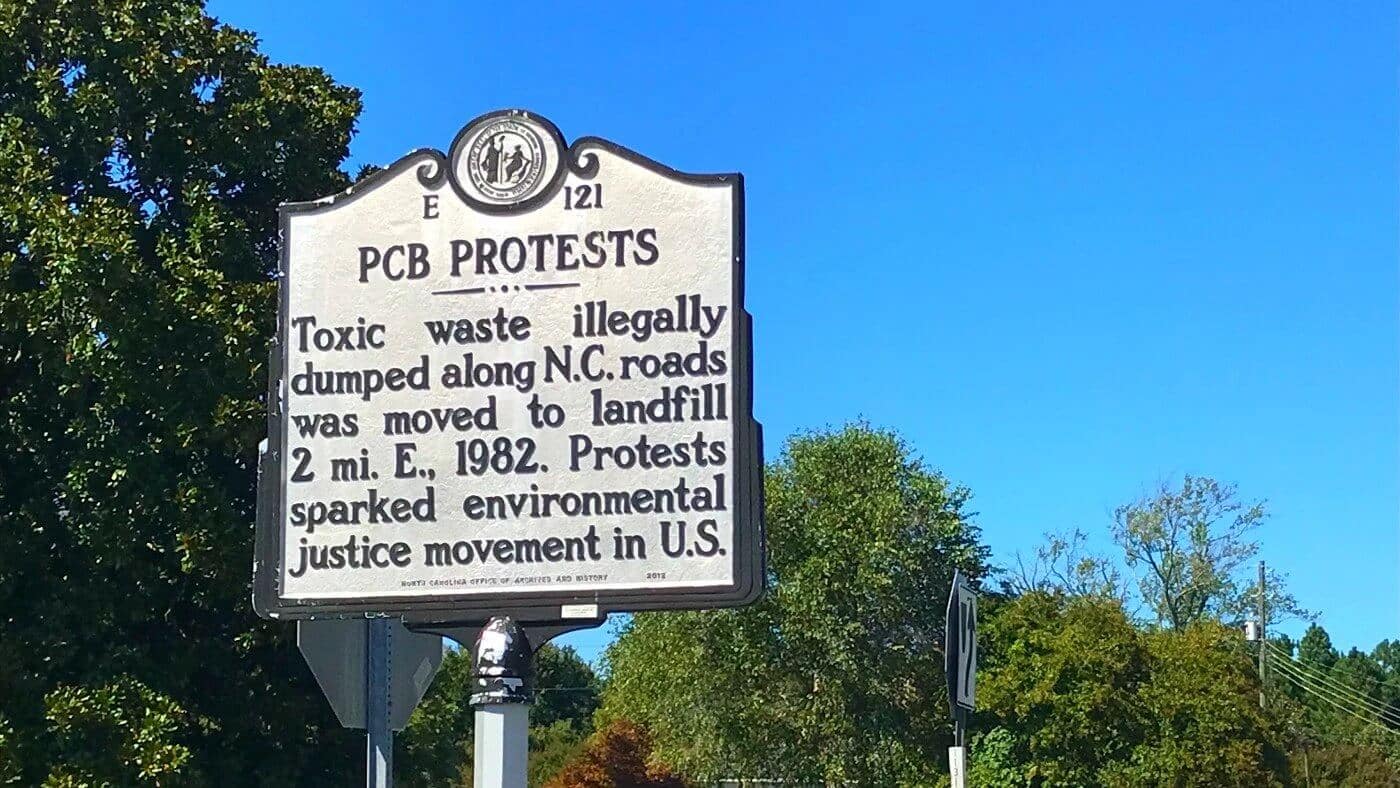
“To other communities out there experiencing PFAS contamination, no matter how small, it IS possible that David can beat Goliath on occasion,” local activist Loreen Hackett told The Hill in an email. “With the horrors Hoosick Falls has had to deal with in the past decade, I hope that our entire community rising up with grit and persistence, arduous as it has been on so many, is proof positive of that.”Also, let us not forget the OG of "forever chemicals," PCBs, poisoning Berkshire and Litchfield counties, in MA and CT respectively, with a toxic PCB legacy that continues to leak into backyards and schoolyards today - these forever chemicals need to be addressed and there are quite a few lawsuits in the works - one lawsuit is from the Town of Lee, MA - then there are some civil lawsuits too.
The H2O Rallying Cry
Loreen Hackett's words, from Hoosick Falls, NY, have become a kind of rallying cry. Across the country, communities are filing and winning: over 12,900 individuals have joined federal PFAS litigation against manufacturers. Municipal water systems have secured billions in settlements from 3M, DuPont, BASF, and Tyco.
Attorneys now predict the PFAS litigation wave will dwarf the asbestos and tobacco settlements. The legal rebellion is real, it is accelerating, and ordinary communities — not environmental lawyers in major cities — started it.
Sansone Europa Stainless Steel NSF Certified Water Dispenser Fusti 15 Liter / 3.96 Gallon
$299.95
Finally a stainless steel water dispenser worthy of your water and worthy of your style. Welcome to our Sansone Europa Stainless Steel NSF Certified Water… read more
Emily Marpe is still in Petersburgh. She is still living with the PFAS in her blood that she can't undo, and with the victory that doesn't give back what she lost. But she is watching younger mothers in communities across the country pick up where she and Michael Hickey began, and she knows what that means.
The MAHA Rupture And The Glyphosate Betrayal
The water movement did not stay small. Over the past several years, a loosely organized but politically potent coalition of mothers, many of them connected through social media, wellness communities, and the Make America Healthy Again (MAHA) movement built a national network around the demand for clean food and water. They were not, at their core, partisan. They came from organic farming communities in rural Montana and activist suburbs in New Jersey. What they shared was a belief that what goes into the water goes into their children — and a fury that institutions kept telling them it was safe.
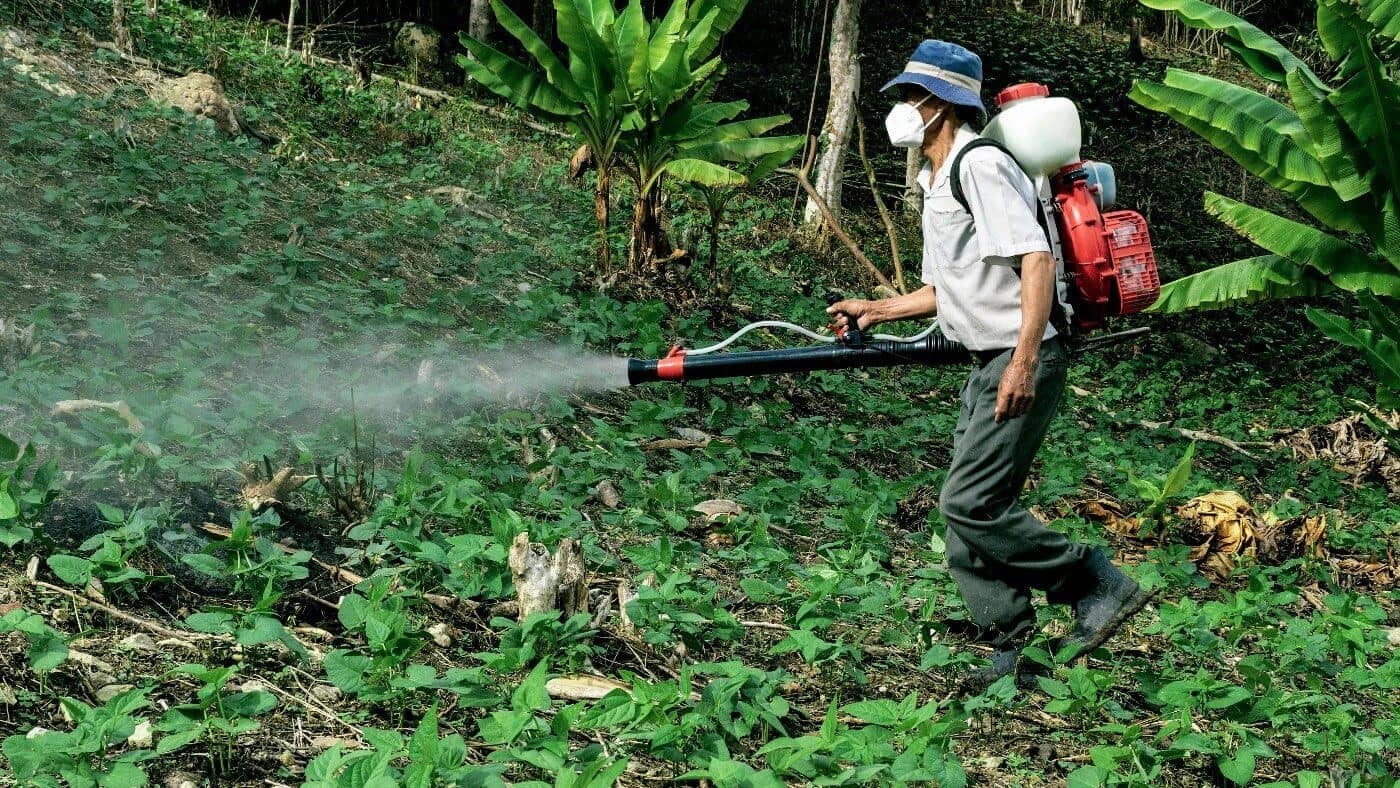 Farm Worker Spraying Herbicides / Image Credit Pexels / Gilmer Diaz
The MAHA movement's most potent political asset was this network of mothers: "mom-fluencers" with large social followings, documented records of pesticide and herbicide harm, and a willingness to show up in person, at Kellogg's headquarters in Battle Creek, at the White House, at Senate hearings. The White House held a "MAHA Moms Roundtable" in March 2025. The movement felt, for a moment, like it had political power.
Then came February 18, 2026. On that day, President Trump signed an executive order invoking the Defense Production Act to guarantee the domestic supply of glyphosate-based herbicides, the active ingredient in Roundup, Bayer-Monsanto's flagship product, which has been linked to cancer in multiple peer-reviewed studies and which the International Agency for Research on Cancer classified as "probably carcinogenic to humans" in 2015. The order went further: it granted liability immunity to manufacturers, effectively shielding Bayer from future lawsuits over glyphosate's health effects.
Key Health Impacts Of Glyphosate
- Cancer Risks: Studies show a potential link to non-Hodgkin's lymphoma, particularly in professionals exposed regularly.
- Organ Damage: High or prolonged exposure may lead to liver inflammation, non-alcoholic fatty liver disease, and chronic kidney disease.
- Neurotoxicity: Evidence suggests glyphosate can induce neuroinflammation, oxidative stress, and behaviors similar to Alzheimer's disease.
- Reproductive & Developmental Issues: Research links it to increased rates of birth defects in animal studies and potential infertility in humans.
- Gut Health: Glyphosate may disrupt the human gut microbiome by killing beneficial bacteria.
Ken Cook, President and Co-Founder, Environmental Working Group said this about the glyphosate executive order ...
"I can't envision a bigger middle finger to every MAHA mom than this. By granting immunity to the makers of the nation's most widely used pesticide, President Trump just gave Bayer a license to poison people. Full stop."The rage inside the MAHA movement was immediate and uncontrolled. Kelly Ryerson, known as "Glyphosate Girl" online, said in a written statement (as reported in The Hill ...
“This move betrays the very MAHA voters who put this administration in power. It stands in direct opposition to the President’s original promise to address the contribution of pesticides to chronic disease.” The scientific case against glyphosate's presence in water is not ambiguous. CDC data shows 81% of the U.S. population has been exposed, including children as young as three. The primary pathway is food, such as contaminated grains, cereals, and bread. Also, glyphosate has also been identified directly in drinking water.
Dr. Philip Landrigan, who has studied the health effects of glyphosate, as director of Boston College's Program for Global Public Health and the Common Good said ...
“I worry especially when a high proportion of those exposed are children, because children eat more food per pound of body weight per day than adults.”The glyphosate executive order has done something the PFAS uprising took a decade to accomplish: it has unified the water movement across political lines in a matter of days.
AI Is The New Water Hog That Drinks Your Entire Aquifer
Emily Marpe, of Petersburgh, NY, was fighting a battle that began in a factory. Now another new water battle begins at AI data centers.
AI systems alone are projected to consume between 312.5 billion and 764.6 billion liters of water in 2025. That water used primarily to cool the server stacks that power the ai chatbot models that Americans use to write emails, generate images, and ask questions. That is a lot of water.
That cooling water, critically, does not go back into the system. It evaporates. A study by the Houston Advanced Research Center found that data centers in Texas alone will use 49 billion gallons of water in 2025, and as much as 399 billion gallons by 2030 — equivalent to drawing down Lake Mead by more than sixteen feet in a single year.
These data centers are being built, deliberately, in dry places. Arid climates reduce the risk of corrosion to servers, and land is cheap. Arizona, Texas, and Virginia have become the primary battlegrounds. Newton County, Georgia, is projected to face a water deficit by 2030 after Meta broke ground on a $750 million data center. Just think, Meta steals the water, shareholders make huge profits and local people get sick and thirsty. Not good. Not good.
Ashburn, Virginia (aka "Data Center Alley") is seeing cumulative aquifer withdrawals that local utilities were not built to absorb.
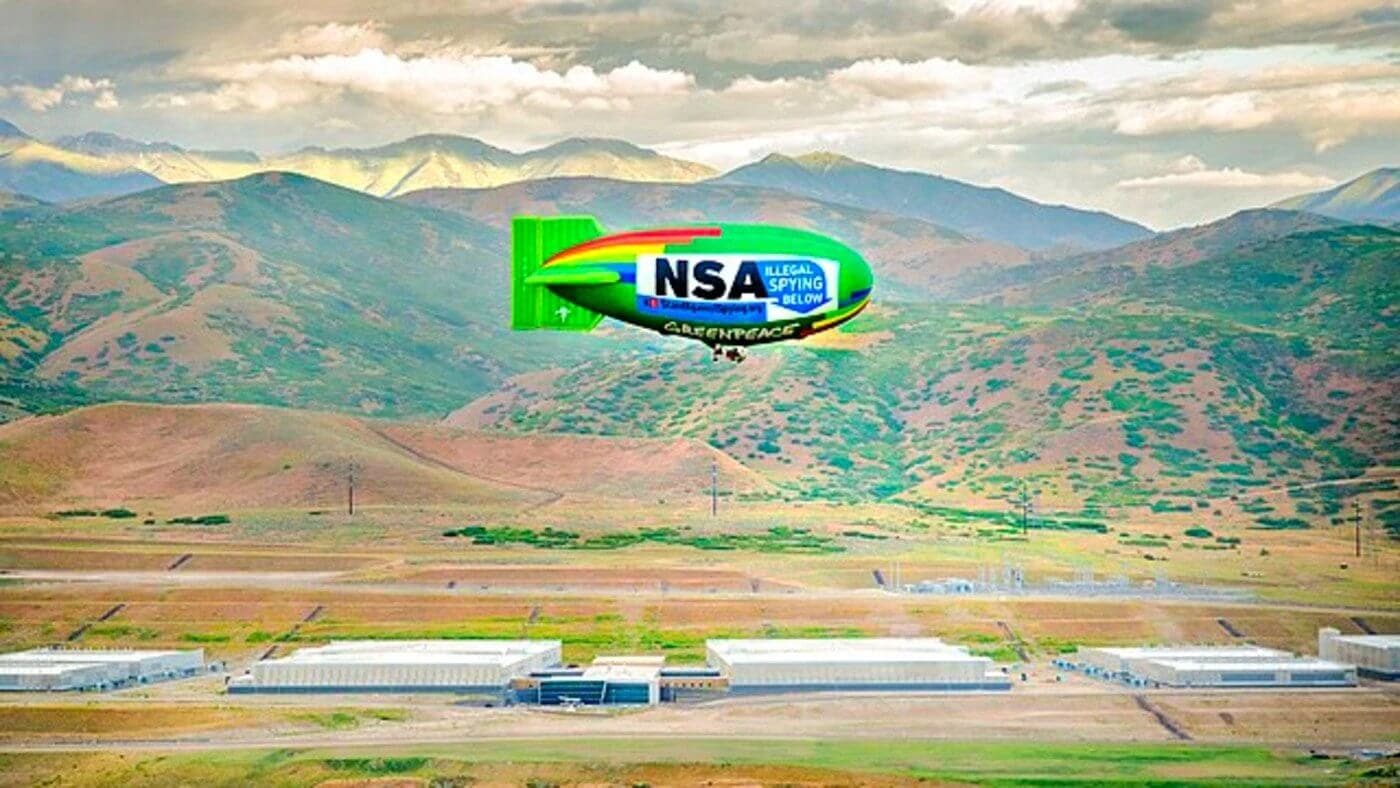 Greenpeace, 10th Amendment Fdn and EFF Airship flying over Utah Data Center / Image Credit Wikimedia
The communities pushing back are not yet as organized as Hoosick Falls - but they are learning fast - and some communities are winning and teaching others to push back. A coalition of 230+ environmental groups is now campaigning to halt new data centers, citing environmental harm.
According to Data Center Watch, between May 2024 and March 2025, $64 billion of data center projects have been blocked or delayed amid local opposition.
But the pattern is familiar: local officials raising concerns, residents filing public records requests, environmental coalitions demanding disclosure. Only 10 percent of data center operators track water use across all their facilities. The opacity mirrors, in structural terms, what PFAS manufacturers maintained for decades: the harm is measurable; the disclosure is voluntary; the communities bearing the cost have no seat at the table.
Bringing some clarity to the situation, Daniel Crow, an energy modeler at the International Energy Agency stated the following in an article in The San Francisco Examiner ...
"Few companies report on their AI-related water use, and those that do offer few details."Emily Marpe, who spent eight years fighting for the right to know what was in her water, would recognize the process of fighting back against bad water actors immediately.
What Rebellion Looks Like
Three battles. Three different polluters. Three different mechanisms of harm. But the same underlying logic: water commons treated as private sacrifice zones, the cost paid by people downstream, the profit collected by people elsewhere.
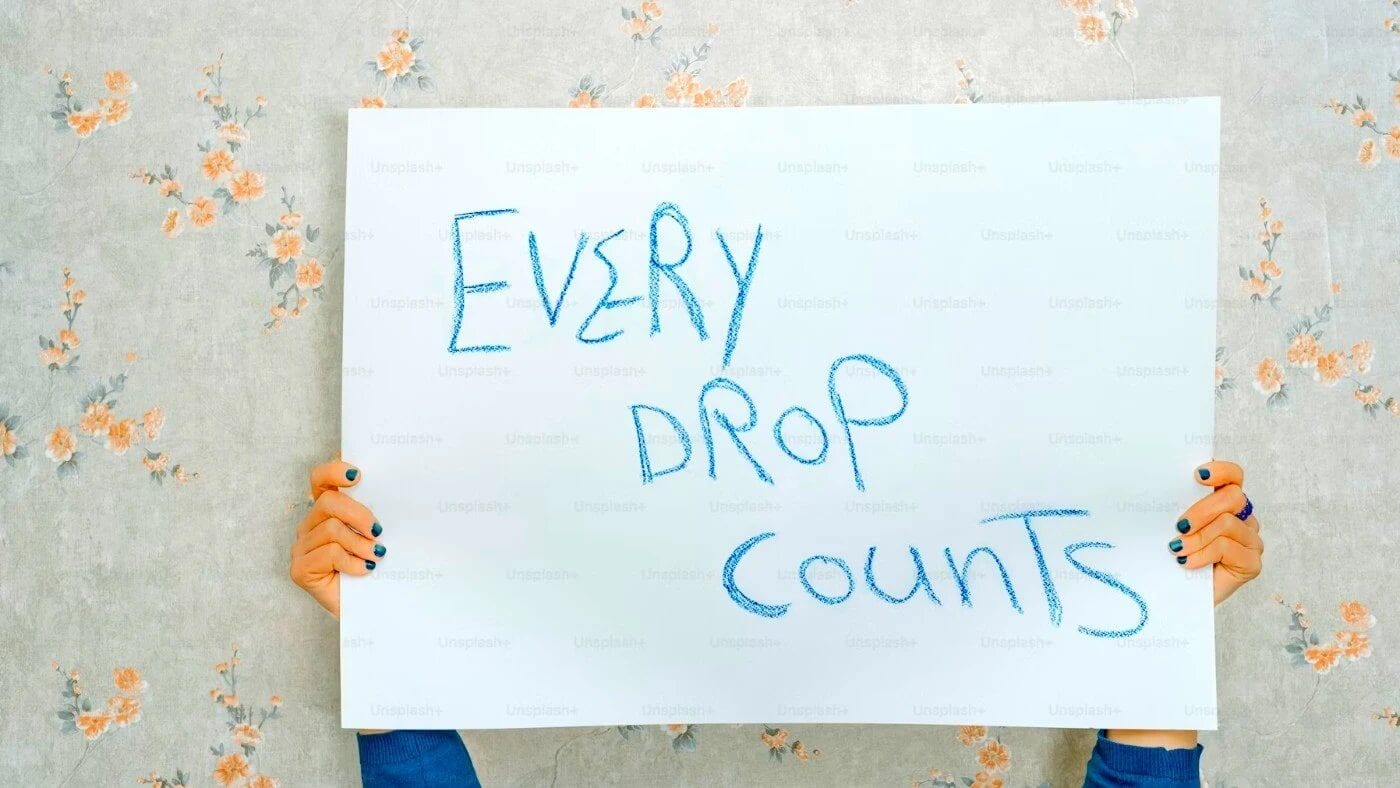 Water Demonstration Sign / Image Credit Unsplash / Benham Norouzi
What has changed, what is genuinely new, is the connectivity of the resistance. Mothers in MAHA networks who started fighting food dyes are now sharing PFAS litigation resources with farmers who are watching glyphosate enter their irrigation wells.
Environmental justice organizers in communities of color, where H2O contamination disproportionately falls, are finding unexpected common ground with suburban wellness activists who never identified as environmentalists. Tech workers, confronted with data about their industry's water footprint, are beginning to ask questions their employers have not prepared answers for.
The Rockland Water Coalition in New York, which spent years fighting a corporate desalination proposal and won, is now redirecting its organizing energy toward PFAS protections as the Trump administration rolls back federal standards. Hoosick Falls has celebrated a new clean H2O supply, including two new wells, a pump house, a mile-long pipeline, while its activists make clear the fight is not over.
Discussing the issue of "sacrifice zones" Chris Hedges speaks of the system that is driving the water uprising ...
"These are sacrifice zones, areas that have been destroyed for quarterly profit. And we're talking about environmentally destroyed, communities destroyed, human beings destroyed, families destroyed. And because there are no impediments left, these sacrifice zones are just going to spread outward."What is most striking about the current moment is the simultaneity. The glyphosate executive order was signed on February 18, 2026.
The PFAS multidistrict litigation, involving more than 12,900 plaintiffs, is advancing toward trial. A 230-organization coalition is demanding a halt to data center construction. All of this is happening in, in the same country, to the same water.
The Cost That Cannot Be Settled
Emily Marpe won. She will tell you that. She will also tell you what winning means when you cannot give people back the years they spent sick, or the neighbors who didn't make it, or the confidence that comes with knowing what is in the glass you hand your child.
The water rebellion in America is not primarily about politics, though it has become politically explosive. It is not primarily about law, though the litigation is extraordinary. It is about a foundational question that every democratic society eventually has to answer: who bears the cost of industrial civilization? Whose water gets sacrificed so others can eat cheap food, use Teflon pans, and run AI queries from their phones?
For most of American history, the answer has been: the people who have the least power to say no. Small towns near factories. Farming communities downstream from industrial agriculture. Rural counties where a data center's tax revenue looks like a gift until the aquifer starts to drop.
What Hoosick Falls proved, what the MAHA mothers, and what the communities fighting data centers are proving again and again, even in their fury and their betrayal, is that the policy and poison is not permanent. It can be changed. It requires time, and organizing, and a willingness to sit in hearing rooms, in corporate offices, in courthouses and in congressional offices for years. But it can be changed.
Emily Marpe is still in Petersburgh. The h2o in her new tap is clean. She knows what it cost to get there, and she knows that somewhere right now, in a county where an AI data center just broke ground, or a glyphosate application just ran off into a creek, someone is about to learn what she learned, standing in a driveway, phone in hand, being told to stop brushing their teeth with the water.
The rebellion has room for them.
A Deeper Look At The Issue - Video
This short video investigates the true cost of the AI revolution, tracing how a AI Data Centers is overwhelming Georgia’s electrical grid and water supplies. The Data Centers consume massive amounts of h2o for cooling, leaving local residents to face the noise, pollution, and rising bills. It exposes the systemic impact of data centers, owned by giants like Meta and Blackstone.
Related Articles

The HEALING WATER We Lost: The Ancient Science of Balneotherapy
Marta Kovács is 61 years old, a retired school administrator from Budapest, and she has been going...
The Broken Water Pipes: Collapsing Water Infrastructure Beneath Your Feet
Donald Wood has driven to Vicksburg to take a shower more times than he can count. Thirty minutes each...
Floating Wetlands: Nature Heals Water Ecosystems
Better late than never, we are seeing real evidence that nature, in the form of floating wetlands and...