
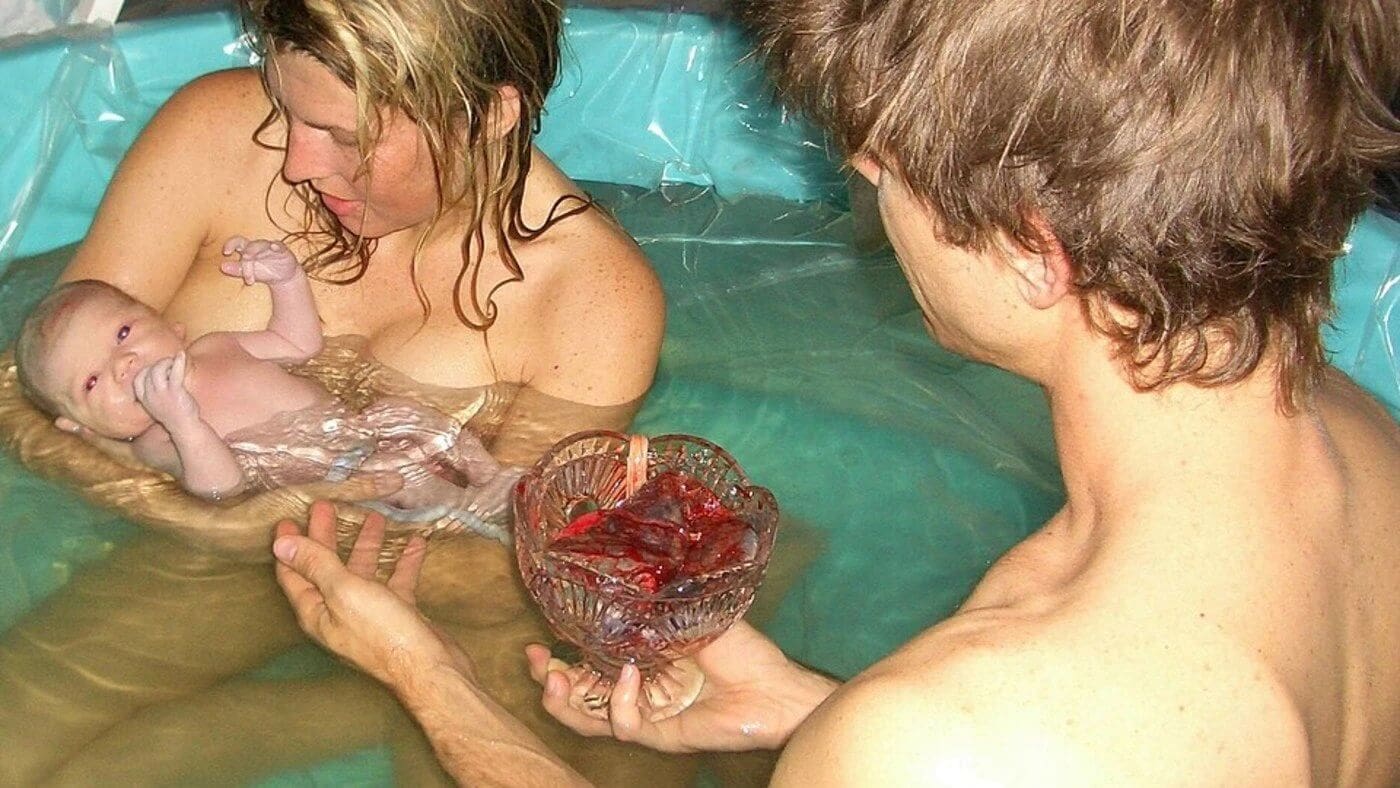
The Miracle of Water Birth: A Gentle, Natural Approach to Childbirth

Table of Contents
Is a water epidural actually a thing? Dive into the science of water birth, where bath meets biology to turn labor into a primal, manageable flow ...
The tub was just a tub, white fiberglass, warm water, a handheld showerhead propped against the rim. But when Maya Reyes lowered herself in at four in the morning, her midwife noticed something she'd seen a hundred times: Maya's shoulders dropped two full inches in about ten seconds. Labor didn't stop. It just slowed enough to become survivable. Maya is hoping water birth was the right choice for her.
Maya was thirty-two, low-risk, and terrified. She'd planned a birth center delivery after reading everything she could find about aquatic birth, the studies, the forum posts, the heated debates on midwifery blogs. She'd come in convinced that water would help. She was right. But she hadn't anticipated the speed of it. Maya said ...
"I went from white-knuckling the bed rail to just breathing. The water felt like it remembered something my body had forgotten."Water birth, or more precisely, hydrotherapy during labor and delivery in water, is one of the oldest comfort interventions in human birth history, and one of the most quietly contested in modern obstetrics. The evidence for laboring in water is strong. The evidence for actually delivering in water is more nuanced. And the gap between what the research supports and what most American hospitals offer is, frankly, a story worth telling.
What The Science Of Water Birth Actually Says
The most comprehensive review of water immersion in labor comes from the Cochrane Collaboration, whose 2018 systematic review found that laboring in water during the first stage significantly reduced the use of epidurals and spinal analgesia, by roughly 10% compared to land-based labor. For a country where epidural rates hover near 75%, that's not a small number. The conclusion from the report is quite astounding and also basic common sense. The report concludes ...
"There is no evidence of increased adverse effects to the fetus/neonate or woman from labouring or giving birth in water."The mechanism is partly thermal, partly mechanical. Warm water reduces the body's cortisol and adrenaline output, lowering perceived pain intensity. Buoyancy takes gravitational load off the pelvis and spine, allowing more freedom of movement. The American College of Obstetricians and Gynecologists (ACOG) acknowledges these benefits for first-stage labor, even as it urges caution about underwater delivery.
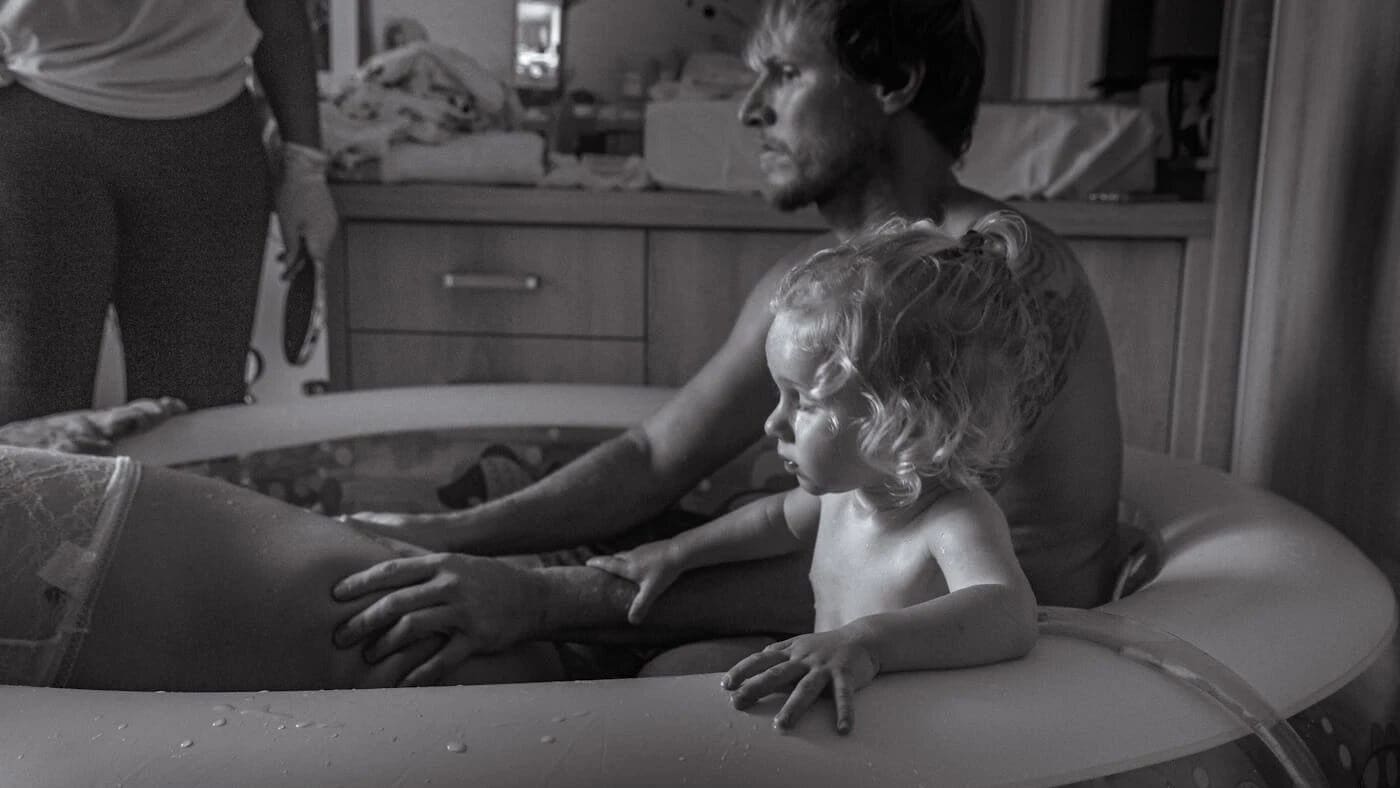 Little Brother And Dad Assisting In Mommy's Water Birth / Image Credit Pexels / Marian Miranda
 Dr. Maralyn Foureur, professor of midwifery at the University of Technology Sydney and a leading researcher in birth environments, described the benefits of water assisted birth ...
"Women used water to reduce their fear of pain and of childbirth itself; to cope with pain, not necessarily to remove or diminish pain; and to maintain control over the process of birth." The evidence for first-stage immersion is robust, and yet in much of the United States, it simply isn't available. Not because it's been found unsafe, but because hospital infrastructure and liability culture haven't caught up with the data.
Back in the birth center tub, Maya was discovering this in real time. Her contractions were still intense. She wasn't floating above pain. But she was moving through it differently, rocking, rotating, finding positions she couldn't have managed on a bed. Her midwife stayed close. The room was quiet.
Water Birth vs. Water Labor: A Crucial Distinction
Here's where it gets nuanced. ACOG draws a clear line: water immersion during the first stage of labor is supported by evidence. Delivering the baby underwater, the second stage, is classified as an "experimental procedure" requiring informed consent, largely because randomized controlled trial data on neonatal outcomes for underwater delivery is still limited.
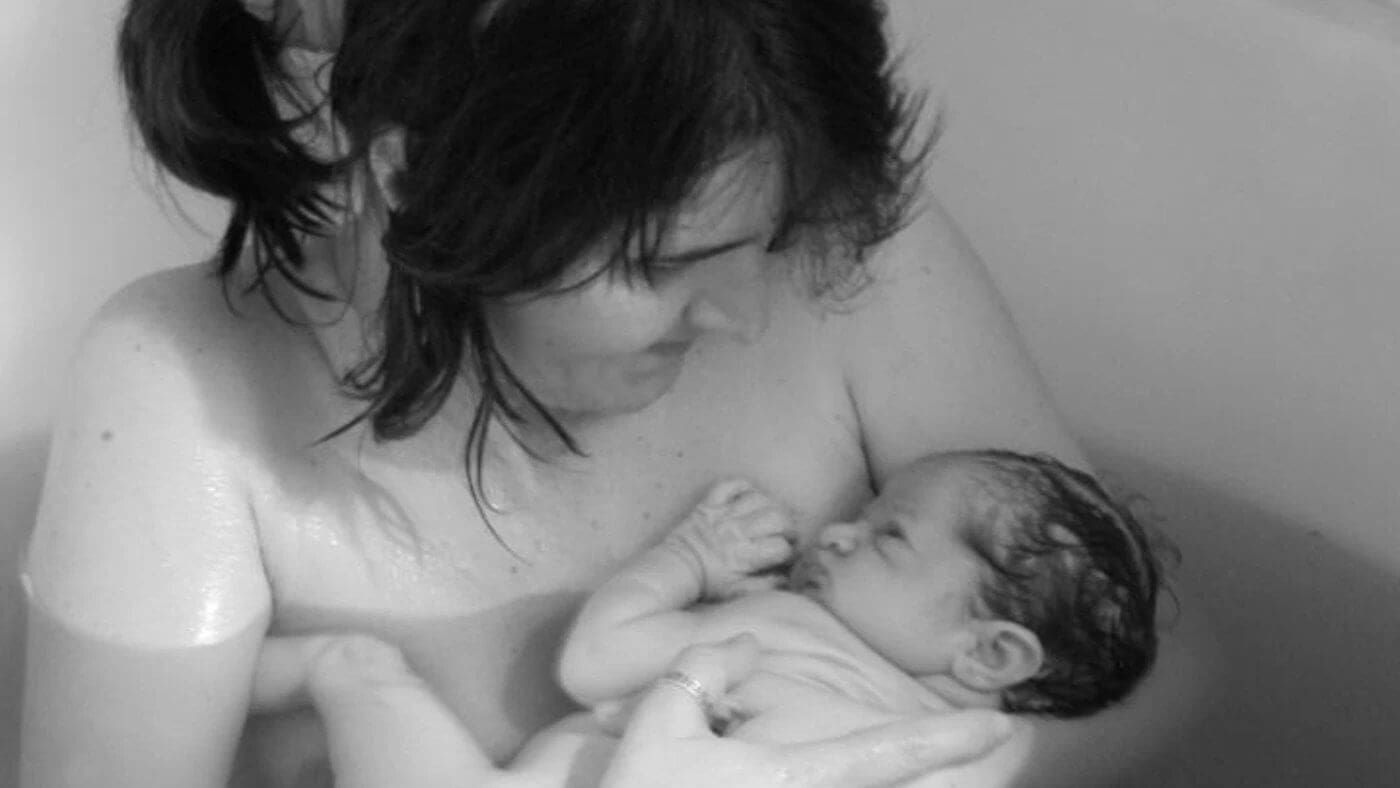 Water Birth At Home / Image Credit Wikimedia / Alberto Perra / Angela Giusti
What we do have is reassuring. A large study published in the Journal of Midwifery & Women's Health, looked at the outcomes of more than 18,000 births, including 6,534 infants born underwater. The news is good. The study finds water-assisted labor and delivery pose no additional risk. That is assuring.
The physiological argument for underwater delivery rests on the well-documented neonatal dive reflex — a physiological inhibition of breathing triggered when the newborn's face contacts water, preventing inhalation until the baby is lifted to air.
Sertodo Niagara Ayurvedic Copper Water Dispenser With Lid 2 Gallon / 7.57 Liter
$335.00
Welcome to our Sertodo Niagara Ayurvedic Copper Water Dispenser With Lid which combines the ancient wisdom of copper and health into a beautiful and functional… read more

Michel Odent, the French obstetrician who first popularized birthing pools in a hospital setting in the 1970s, spent decades documenting this reflex. His position: when the water is warm, the pregnancy is low-risk, and a skilled attendant is present, water-assisted labor and delivery birth is safe and it is transformative. His foundational work is collected in The Nature of Birth and Breastfeeding. According to Dr. Odent ...
“People never sing, except in the bathroom. Birthing women also make their natural sounds next to running bath water. There is something about the power of water. People are drawn to water, spas, and sacred streams. Women in labor are drawn to water, too.”Across the pond, the UK's National Health Service has effectively agreed: all NHS midwifery-led units are now required to offer access to a birthing pool. In the Netherlands (Holland), water birth is routine.
But, in the good 'ol United States, for some reason, oh its the change from an overly controlling and allopathic view of birthing, water-assisted births remains an outlier, available at freestanding birth centers and in some forward thinking hospital units, but far from standard.
Questioning why there is a serious lag in water births in the USA, Marit Bovbjerg, an assistant professor of epidemiology in Oregon State University's College of Public Health and Human Sciences proclaimed ...
“What we found here is that water birth can be totally safe in home birth and birth center settings. So surely you can also pull this off in a hospital, where many more resources are available."Maya's birth crossed the line. She'd planned to labor in water and deliver on the bed. In the end, she didn't make it out of the tub. Her midwife, trained and ready for both possibilities, guided her through a smooth water delivery.
Maya barely noticed the transition. She said,
"I just kept breathing, and then he was there."Who Water Birth Is For And Who Its Not For
Water birth is not for everyone. According to an article on aquatic birth in WebMD ...
- You shouldn’t try waterbirth if you’re younger than 17 or older than 35.
- You shouldn’t try waterbirth if you have complications like preeclampsia or diabetes.
- You shouldn’t try waterbirth if you are having twins or multiples. You shouldn’t try waterbirth if your baby is in the breech position.
- You shouldn’t try waterbirth if your baby is premature.
- You shouldn’t try waterbirth if you’re having a really big baby.
- You shouldn’t try waterbirth if you need to be constantly monitored and it can’t be done in the tub.
- You shouldn’t try waterbirth if you have an infection.
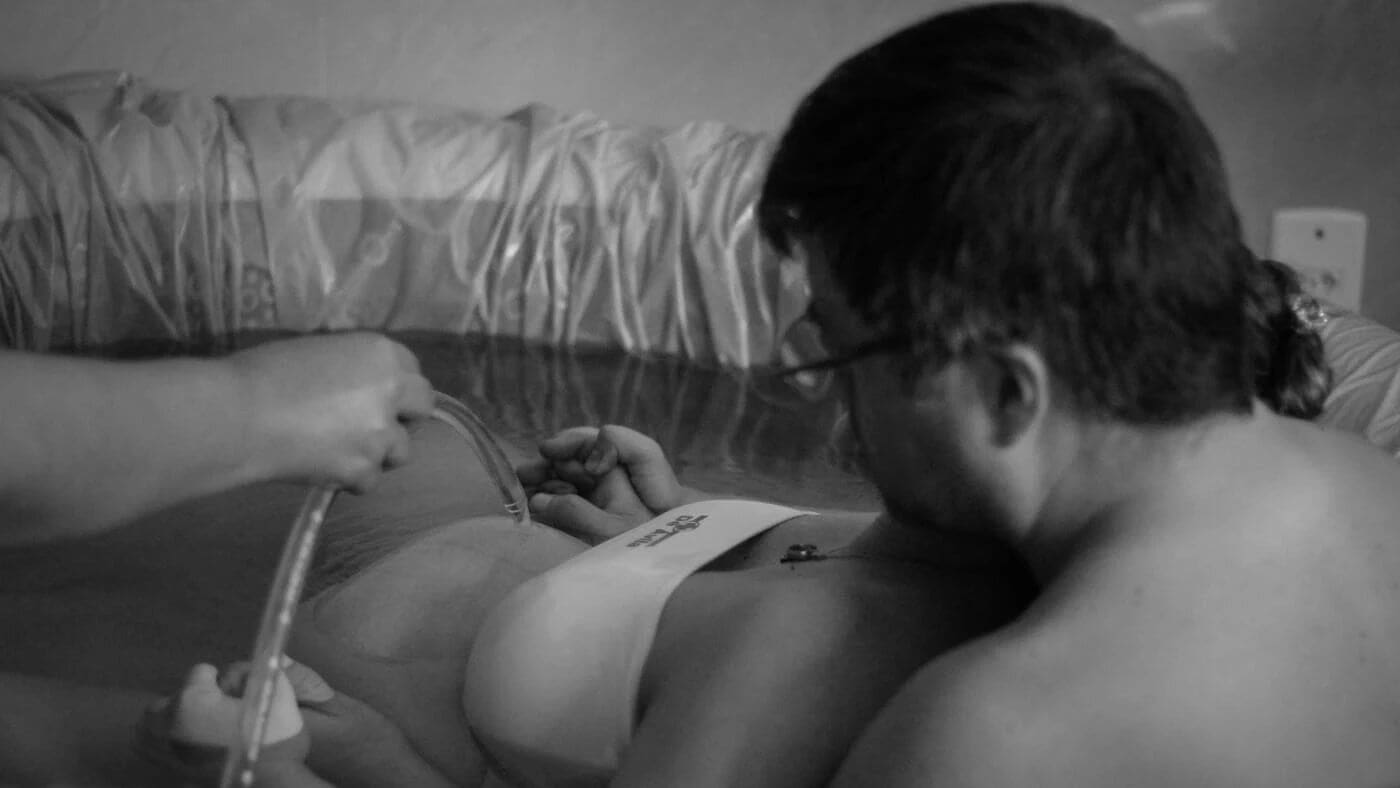 Husband Supporting His Wife During Water Birth / Image Credit Pexels / Hannah Barata
If you're considering water labor or water immersion during birth, the practical path is clear: confirm you're a low-risk candidate, find a birth center or hospital unit that offers a pool, and discuss second-stage plans explicitly with your provider. Many women choose to labor in water and deliver on land. Some, like Maya, choose the full experience. Both are valid.
How to Plan Your Water Birth
Ask early. Raise it at your first prenatal visit. Not all hospitals offer birthing pools; birth centers almost universally do. Use the Birth Center Locator to find an accredited center near you.
Know the distinction. Water labor has strong clinical support. Water delivery requires informed consent and a skilled attendant. Understand both before writing your birth plan.
Read the research yourself. See Evidence Based Birth's water birth review by Rebecca Decker is the most rigorously updated lay summary available. Start there.
Discuss Group B Strep (GBS) status specifically. If you test positive for Group B Strep, ask directly how your provider handles aquatic birth, protocols vary significantly.
Trust the midwifery model. Birth centers with experienced midwives have the highest water-assisted labor and delivery rates and the clearest protocols. If this matters to you, make sure your care setting can actually support it.
What Maya Knew
Maya went home two days later. Her son, born in the water in the quiet of a February morning, was healthy and calm. She said the thing that surprised her most wasn't the birth itself. It was how long the feeling of the water stayed with her, the sense that her body had done something ancient and exactly right. Maya said,
"I didn't know water could do that, I kind of think everyone should know."She's not wrong. The science is there. The access to water assisted birth is the only thing still missing in America.
A Deeper Look At The Issue - Video
This short video dives into the essentials of water birth with Bridget Teyler, a certified childbirth educator and doula. Bridget breaks down the systemic benefits of hydrotherapy for labor, exploring how immersion can manage pain and facilitate a gentle transition. From safety FAQs to the evidence-based facts of delivery in water, get the expert guidance you need for an informed birth.
Related Articles

The HEALING WATER We Lost: The Ancient Science of Balneotherapy
Marta Kovács is 61 years old, a retired school administrator from Budapest, and she has been going...
The Broken Water Pipes: Collapsing Water Infrastructure Beneath Your Feet
Donald Wood has driven to Vicksburg to take a shower more times than he can count. Thirty minutes each...

WATER Tower Style: The 5 Coolest WATER TOWERS on Earth
She almost didn't notice it. Maria Hernandez, a Chicago landscape architect who has spent fifteen...