
Reversing The Global Water Crisis: The 4 Pillar Plan

Table of Contents
- Reversing the water crisis takes systemic action. We need a 4 Pillar Roadmap: military-industrial accountability, precision farming, pipe grid repairs, and restored wetlands ...
- Pillar 1: Transforming the Military-Industrial Footprint
- Top Five Key Military-Industrial Reforms Required
- Pillar 2: Modernizing Agricultural Water Systems and Halting Synthetic Contamination
- Top Five Agricultural Reforms Required
- Pillar 3: Updating Urban Grids and Decentralizing Infrastructure
- Pillar 4: Restoring Natural Ecological Buffers
- Top Five Ecological Buffers To A Pollution Water Crisis
- The Path Forward
- In Brief: Four Pillars Of Reversing A Water Crisis
- A Deeper Look At The Issue - Video
Reversing the water crisis takes systemic action. We need a 4 Pillar Roadmap: military-industrial accountability, precision farming, pipe grid repairs, and restored wetlands ...
In the West Plains community, just west of Spokane in Eastern Washington state, Marcie Zambryski came across an inconvenient truth. Her family's water crisis and the water crisis in her community is a direct result of PFAS from the nearby Fairchild Air Force Base.
For decades, the surrounding valley relied on groundwater drawn from a shallow, unconfined aquifer. And to add insult to injury, the In 2017, the Spokane International Airport tested the water from two new test wells for PFAS. Every sample came back with levels above the EPA's drinking water health advisory.
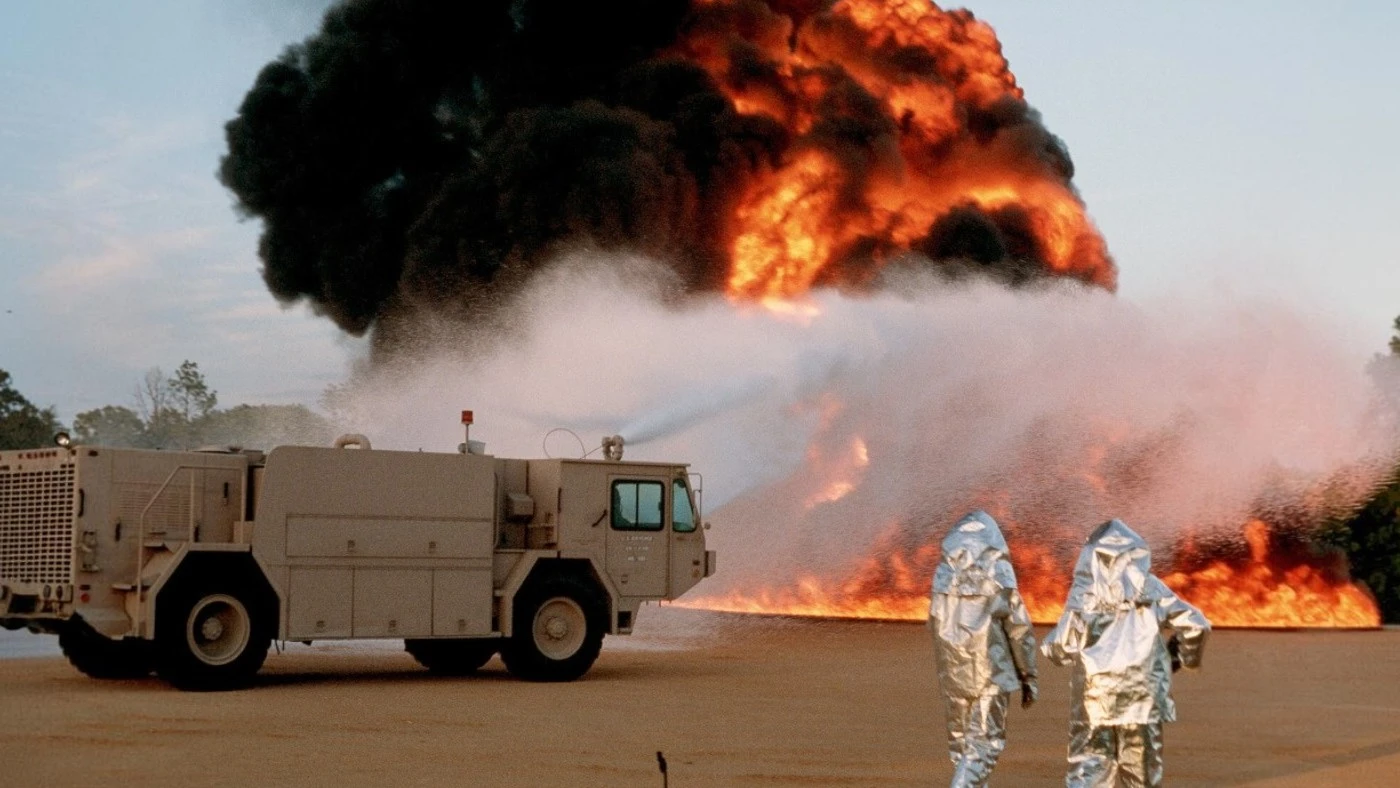
The culprit, is the DOD, dumping copious amounts of PFAS heavy Aqueous Film-Forming Foam (AFFF).
The military is going to town around the world using is a specialized water-based chemical mixture used by firefighters to rapidly extinguish high-hazard Class B flammable liquid fires, such as petroleum, oil, and jet fuel.
Looking past the test well toward the fenced perimeter of the airfield, Marcie and other residents realized that turning the water crisis around requires confronting the full scale of human impact, starting with major military-industrial facilities. Marcie said ...
"You're living in the country so you can live a healthy life...not to think you're living in the country drinking toxic water."Marcie and her fellow neighbors in West Plains, WA, are facing widespread water crisis of contamination around Fairchild Air Force Base and Spokane International Airport. West Plains residents are refusing to wait in the dark. As the Washington State Department of Ecology and the EPA weigh cleanup strategies, the West Plains Water Coalition is mobilizing local neighborhoods, tracking private well safety, fostering grassroots action, and demanding government transparency, especially from the Military and the military industrial players.
Pillar 1: Transforming the Military-Industrial Footprint
To turn the global water crisis around, public policy must address major institutional polluters - pointing at companies like GE, Dow and Bayer, as well as the institution of the US military itself.
As the US military is the world's largest single polluter, organizational energy user, the defense sector (aka the DOD) operates thousands of global facilities that require massive daily water withdrawals for equipment cooling, facility maintenance, industrial and military operations. And, that is before counting the impact of global war operations.
Beyond direct water volume, military-industrial operations have created severe localized chemical contamination in the USA - and - all around the world. So not to just pick on the big bad USA military machine, this military pollution water crisis is impacting the planet's water, like Vietnam's water, with Agent Orange and with the US military's long term destructive bombing of Iraq's Tigris and Euphrates Rivers, in the heart of historical Babylon, (aka the cradle of civilization) where the world's first cities, farming communities, and writing systems emerged.
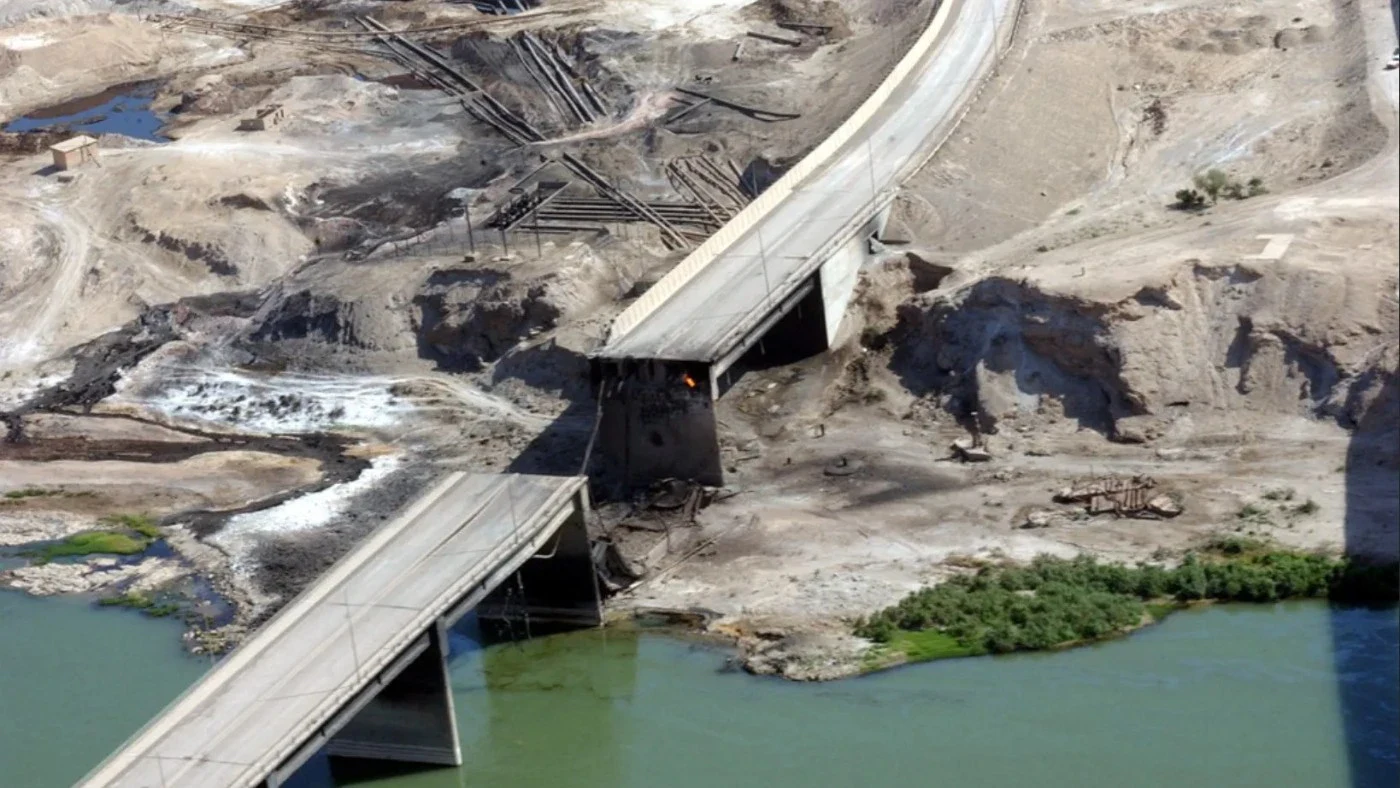 Bombed bridge near Bayji, Iraq. Poison gas leaked into the Tigris River / Image Credit National Archives
As discussed on the And So It Flows podcast, former US State Department Official and US Marine Captain Matthew Hoh discussed that after 30 years of incessant bombing by the US military, Tigris and Euphrates Rivers are currently highly polluted and in a shambles.
For decades, military airfields and defense manufacturing plants relied heavily on Aqueous Film-Forming Foam (AFFF) for fire suppression training. AFFF contains high concentrations of persistent PFAS compounds, frequently referred to as forever chemicals due to their resistance to natural degradation in soil and water. Formal audits published by the US Government show that the Department of Defense has identified over 700 installations requiring environmental remediation for PFAS releases affecting nearby drinking water aquifers.
Simply said, the US military and water do not mix.
In her documentary investigation, Earth's Greatest Enemy, journalist and filmmaker Abby Martin highlights how routine equipment maintenance and industrial solvent disposal across defense facilities generate vast, continuous environmental liabilities that pollute local, regional, national and global watersheds for decades.
The film shows how the US military operates as the planet’s largest single greatest polluter. It leaves a footprint of toxic water contamination, heavy carbon emissions, and degraded landscapes worldwide.
In a recent 28 minute interview with Pulitzer Prize winning journalist Chris Hedges, Abby Martin said …
"But when it comes to Camp Lejeune, this was a story that was happening for decades. I mean, they were dumping so much toxic waste. You look at just the maintenance of the military arsenal alone. The amount of toxic chemicals that are dumped into the ground in the open just to clean these engine parts to make these missions, you know, to make these engines mission ready to fly around in pointless patrols. So, the amount of toxic waste that's accumulating every day, I mean, it's really unquantifiable. So the military was doing this, dumping the toxic waste into water wells at this Marine Corps base for years and years and years. So when the tests were done and they knew the wells were poisonous, instead of stopping the dumping they continued. They continued for years and and covered it up while Marines were drinking the water, bathing in the water. "Martin's investigation underscores that toxic waste accumulation from military operations and maintenance are not an accidental historical legacy, but an ongoing byproduct of daily operations.
Furthermore, aging fuel storage systems, known use of toxins and unending and unessacary wars demonstrate how defense infrastructure failures threaten primary drinking reserves, global climate and life itself.
When jet fuel or industrial solvents enter deep subterranean aquifers, or when bombs, drones and missiles drop, either in practicing for war and when engaging in forever wars, purifying the water supply requires cleanup, not to mention a scaling back of forever war military action.
Top Five Key Military-Industrial Reforms Required
- Complete Transition to Fluorine-Free Foams: Fully replacing fluorinated firefighting foams with modern, synthetic fluorine-free alternatives across all training, maintenance, and operational facilities nationwide.
Mandatory Closed-Loop Depot Recycling: Installing onsite advanced filtration units at military maintenance facilities and defense manufacturing plants to continuously purify and recycle wash water, achieving zero toxic discharge into municipal watersheds.
Dedicated Remediation Funding: Expanding federal defense environmental restoration accounts to directly fund municipal water filtration retrofits, deep-well testing, and long-term aquifer cleanup for impacted surrounding communities.
Onsite Base Watershed Restoration: Transforming military installations into green infrastructure testing grounds by integrating bioretention swales, permeable surfaces, and artificial wetlands to capture and treat stormwater onsite.
Ending Forever Wars & Overseas Footprint Contamination: Phasing out perpetual conflict and reducing sprawling overseas deployments to halt the destruction of global water infrastructure, eliminate massive wartime fuel waste, and redirect defense budgets toward civilian ecological restoration.
Pillar 2: Modernizing Agricultural Water Systems and Halting Synthetic Contamination
Addressing the global water crisis requires a fundamental shift in how food is grown across in the agricultural valleys of our big blue planet. Currently, farming accounts for nearly seventy percent of all freshwater drawn worldwide and a large amount of toxic pesticide and herbicide run off.
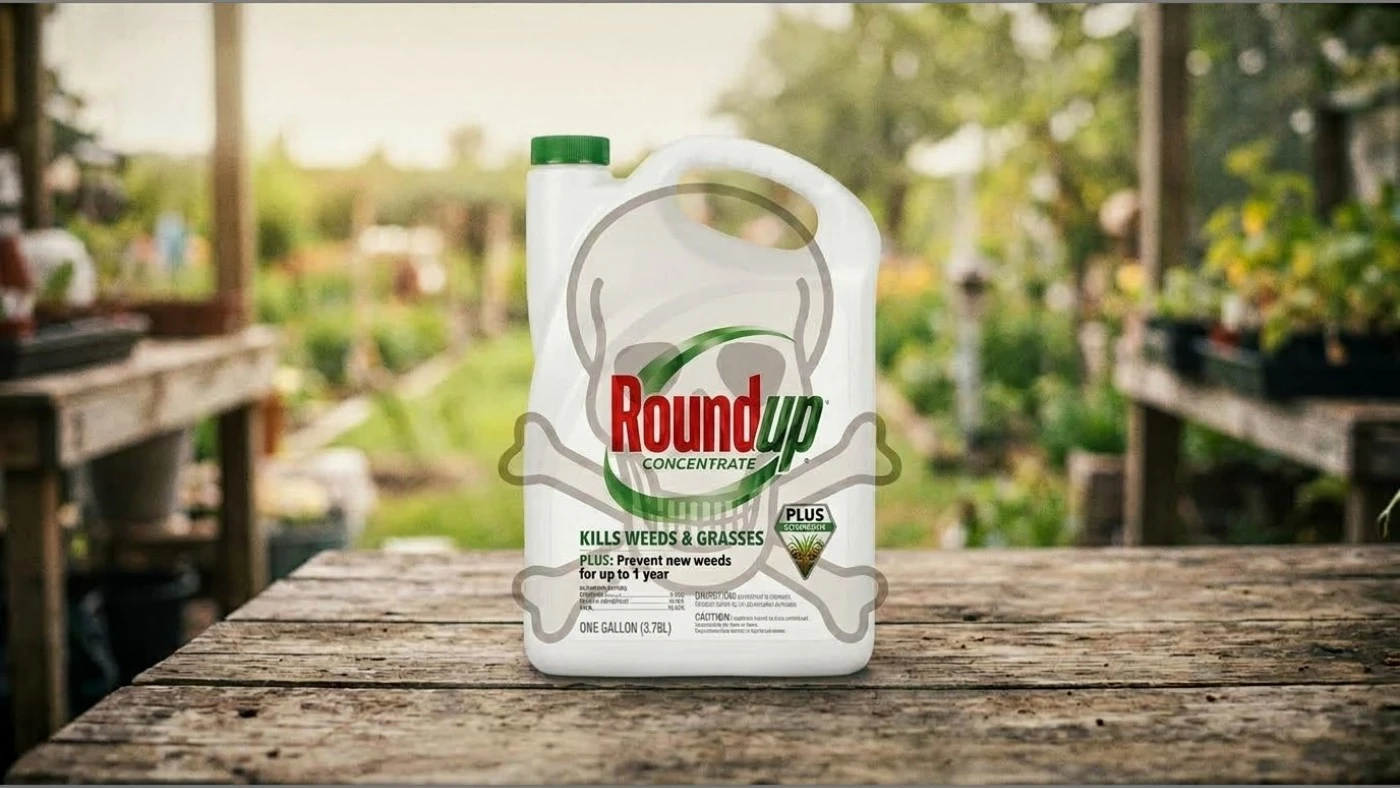 Letting go of chemically dependent agriculture, reduces toxic tun-off into water / Image Credit Gemini
Legacy flood irrigation wastes massive amounts of water through surface evaporation, while intensive chemical farming, which comes from the so-called green revolution, treats soil as an inert medium requiring constant applications of petrochemical fertilizers, synthetic herbicides, and glyphosate. The myth of the green revolution has resulted in vastly increased water pollution and chemically dependent monoculture - here and in the developing world.
Sertodo Niagara Ayurvedic Copper Water Dispenser With Lid 2 Gallon / 7.57 Liter
$335.00
Welcome to our Sertodo Niagara Ayurvedic Copper Water Dispenser With Lid which combines the ancient wisdom of copper and health into a beautiful and functional… read more

Speaking on the impact of the Green Revolution, Vandana Shiva, an Indian scholar, environmental activist, and food sovereignty advocate known for her work against corporate agriculture and globalization, argues that the Green Revolution is a myth because it traded genuine ecological and nutritional abundance for a corporate-driven monoculture of chemically dependent commodities. In her influential book, Stolen Harvest: The Hijacking of the Global Food Supply, Vandana states ...
“Globalized industrialized food is not cheap: it is too costly for the Earth, for the farmers, for our health. The Earth can no longer carry the burden of groundwater mining, pesticide pollution, disappearance of species and destabilization of the climate. Farmers can no longer carry the burden of debt, which is inevitable in industrial farming with its high costs of production. It is incapable of producing safe, culturally appropriate, tasty, quality food. And it is incapable of producing enough food for all because it is wasteful of land, water and energy. Industrial agriculture uses ten times more energy than it produces. It is thus ten times less efficient.”When rain falls on chemically treated fields, runoff carries toxic herbicide residues, including Roundup and persistent weedkillers, straight into rural creeks and deep drinking aquifers - and causing - water harm, soil harm and a quite a bit of human health harm.
Transforming agricultural water management requires pairing volumetric precision with chemical purity and learning and practicing regenerative agriculture (aka regenerative farming).
Meanwhile, replacing synthetic chemical packages with regenerative soil stewardship, such as cover cropping, rotational grazing, and compost integration, transforms agricultural fields into natural biological sponges capable of absorbing heavy rainfall without polluting regional water supplies.
Official guidelines published by the World Health Organization emphasize that preventing chemical contamination at the farm level is far more cost-effective than attempting to remove synthetic pesticides from municipal drinking water through downstream treatment.
Top Five Agricultural Reforms Required
Conversion to Precision Irrigation Infrastructure: Transitioning open cropland from wasteful flood irrigation to micro-drip irrigation and real-time soil hydration monitoring to eliminate surface evaporation losses.
Phase-Out of Petrochemical Herbicides and Pesticides: Eliminating glyphosate, Roundup, organophosphates, and synthetic chemical packages in favor of biological pest controls and organic soil management to stop water-soluble toxins from leaching into groundwater tables.
Adoption of Regenerative Agriculture: Implementing mandatory cover cropping, no-till cultivation, and multi-species rotations to build topsoil organic matter, doubling the land's natural water retention capacity.
Establishment of Vegetated Riparian Buffer Zones: Mandating deep-rooted native plant corridors along field boundaries and stream banks to naturally capture, filter, and absorb agricultural drainage before it enters regional rivers.
Restoration of On-Farm Bio-Filtration Swales: Integrating bioswales, an engineered, gently sloped, vegetated channel designed to treat and filter pollutants out of stormwater runoff replenishing depleted subterranean aquifers naturally.
Pillar 3: Updating Urban Grids and Decentralizing Infrastructure
Modernizing municipal water systems requires investment, transitioning away from centralized, 19th-century pipe networks toward resilient, decentralized urban grids.
Decades of delayed capital investment have left public utilities struggling against severe infrastructure decay.
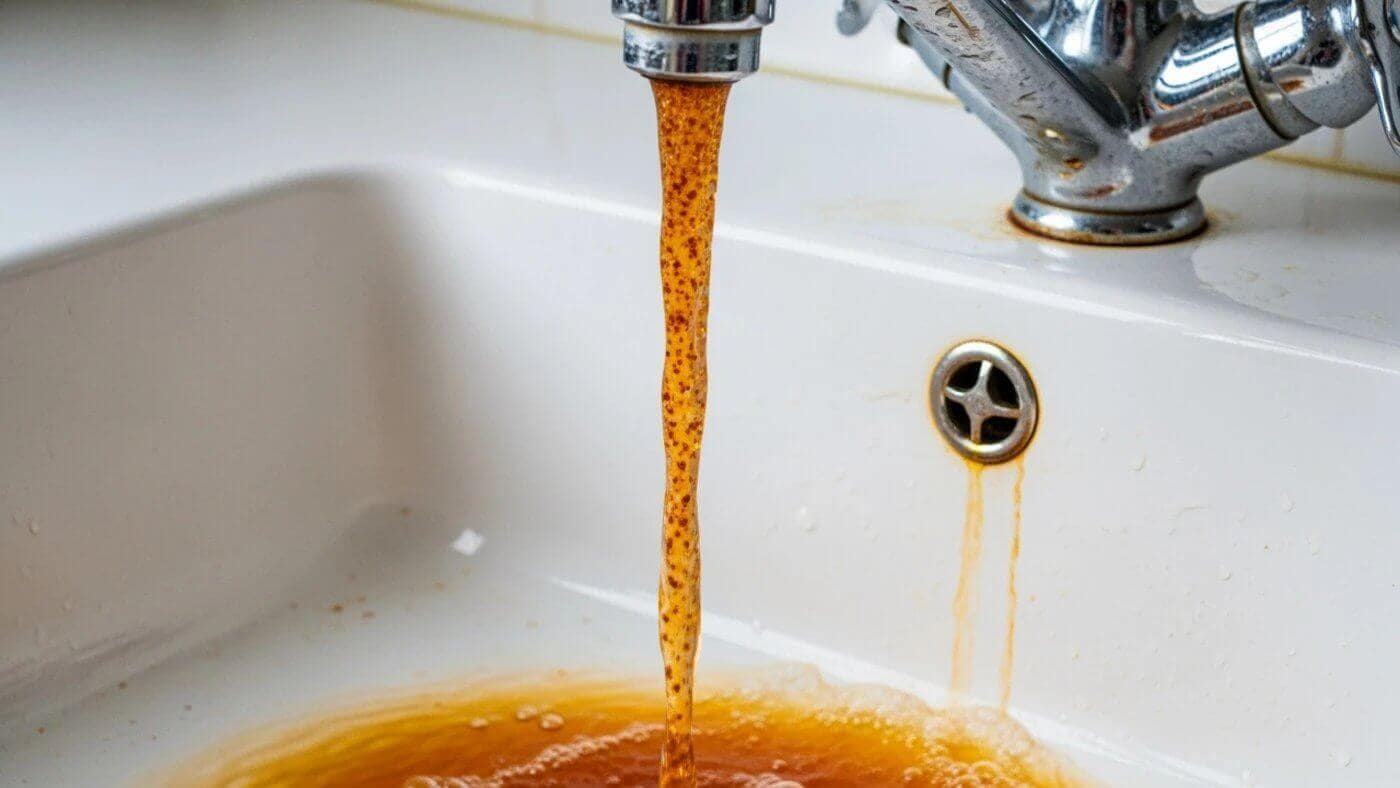
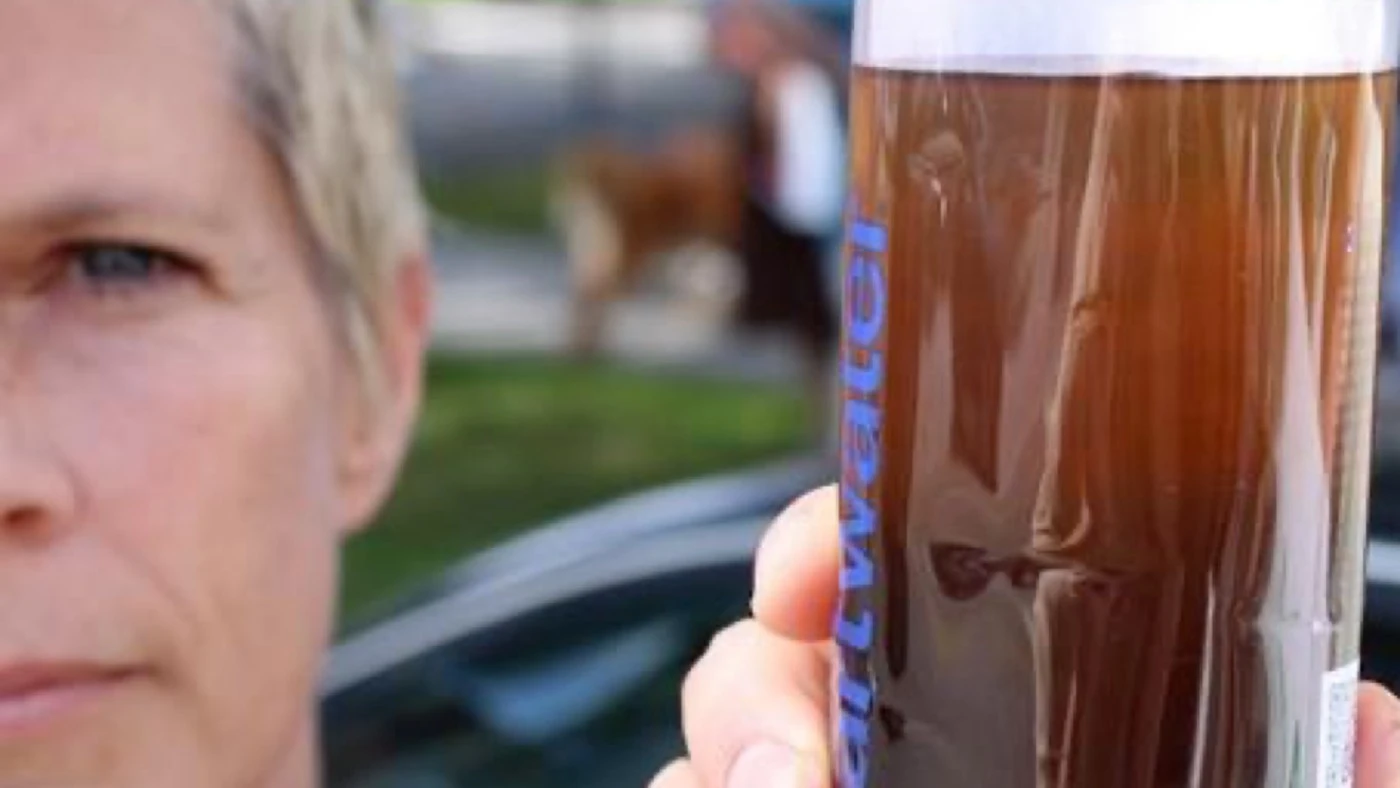 Housatonic, MA resident shows his water crisis from troubled water supplier Housatonic Water Works / Image Credit Shaw Israel Izikson, Executive Editor, Berkshire Edge.
According to the American Water Works Association, in a stunning report called Beyond the Replacement Era, they say ...
"Over the next 25 years (2026–2050), total drinking water infrastructure needs are projected at $2.1–$2.4 trillion (2025 dollars), far exceeding earlier estimates that focused primarily on replacing buried pipes. These pressures represent a structural shift in the cost of providing safe, reliable drinking water, not a temporary spike."To add to devastated municipal water infrastructure issues, on the morning of January 19, 2026, a 72-inch concrete pipe, a major sewer artery, known as the Potomac Interceptor, collapsed along the Clara Barton Parkway in Montgomery County, Maryland. With the poop water landing in the Potomac River.
In an article published June 29, 2026 in Nature World News stated ...
"Over the course of approximately ten days, an estimated 200 to 300 million gallons of raw, untreated sewage poured from the breach into the C&O Canal and from there into the Potomac River, one of the East Coast's most significant and widely used recreational waterways, and the primary drinking water source for Washington, D.C., and its surrounding communities. The smell was, by multiple accounts, immediately detectable from a considerable distance. NBC correspondent Mark Segraves, who visited the site, reported that you can taste it, even when you're talking. Montgomery County Fire and Rescue personnel were advised to wear personal protective equipment near the area."This clearly shows Modernizing municipal water systems requires transitioning away from centralized, 19th-century pipe networks toward resilient, decentralized urban grids. Decades of delayed capital investment have left public utilities struggling against severe infrastructure decay.
Pillar 4: Restoring Natural Ecological Buffers
The final pillar to reverse the water crisis rests on restoring natural ecosystems to self-purify and store water across entire catchments. For over a century, urban development stripped river valleys of wetlands, channelized natural streams, and paved floodplains, removing the planet's primary biological purification mechanism.
One way is by re-establishing natural wetlands, floating wetlands and riparian plant buffers slows kinetic floodwaters, allowing moisture to soak into deep underground aquifers while roots absorb heavy metals and excess agricultural nutrients.
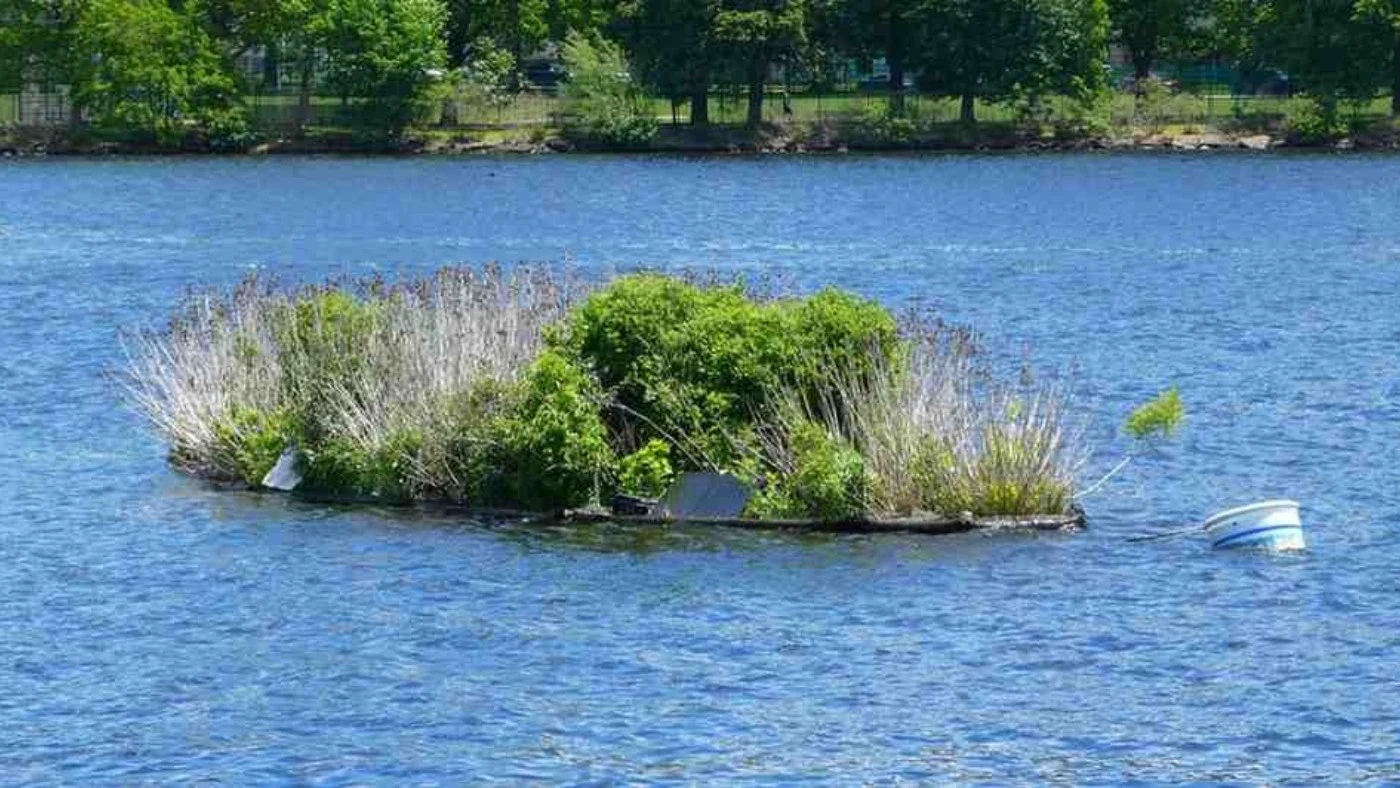 Floating Wetland helping restore Boston's Charles River / Image Credit Wikimedia Commons
In one of my recent articles we show that floating wetlands help restore water bodies rivers and provide continuous biological purification without requiring chemical additions or grid energy.
Additionally in that same article we highlight and an article in The Guardian article Professor Simon Beecham from the University of South Australia, co-author of a leading study into floating wetlands said the following …
“We have always been taught that solutions need hard engineering – you had a system and you add a process and some chemicals. Adding, we’ve worked out that no matter how hard you engineer something, nature filters everything much better than anything else. Engineers are working out that nature does a pretty good job by itself. If you can use nature, you’ll come out with a more optimal answer.”Professor Simon Beecham's analysis highlights how these bacteria are the real superheroes. They actually "eat" the pollution. They can break down complex chemicals, nasty cyanobacteria, industrial heavy metals, and even start to tackle those "forever chemicals" like PFAS. Professor Beecham's work shows that nature can regenerate. Regeneration is a great way to tackle the water crisis.
Another ecological buffer to the water crisis from pollution is called the Riparian Buffer
Bordering rivers, streams, and wetlands, riparian buffers are nature’s undeveloped front lines, rich with trees, shrubs, and dense vegetation. Beyond serving as crucial wildlife sanctuaries, these biological corridors act as double-duty assets for nearby towns: they generate value through environmental stability while saving municipalities millions in infrastructure repairs.
During heavy downpours, riparian zones function like massive sponges and natural filters absorbing torrential stormwater to blunt the impact of catastrophic flooding and pollution. As flood water moves through the root systems, it undergoes natural filtration, stripping out road salt, oil, and chemical runoff before it can spoil local watersheds or harm temperature-sensitive aquatic species like trout.
Top Five Ecological Buffers To A Pollution Water Crisis
- Wetlands and Marshes: Act as massive biological sponges that absorb floodwaters, filter heavy pollutants, and slowly recharge underlying aquifers.
- Riparian Buffer Zones: Vegetated strips along riverbanks that prevent soil erosion, absorb agricultural runoff, and stabilize water temperatures for aquatic life.
- Coastal Mangrove Forests: Dense shoreline root networks that dissipate ocean wave energy, protect coastal communities from storm surges, and trap sediment.
- Upland Forests and Reforested Basins: Headwater canopy and deep root networks that slow rainwater runoff, prevent mudslides, and facilitate deep groundwater infiltration.
- Floodplains and Re-Meandered River Valleys: Natural low-lying areas that allow swollen rivers to spread out safely, reducing downstream water velocity and trapping nutrient-rich sediment.
The Path Forward
Our path forward is to recognize, we can be 2 percent more butterfly, and 2 percent less locust. Note - if the titanic moved 2 percent early enough, they would have missed the titanic.
Reversing the global water crisis demands an immediate, coordinated transition from ineffective crisis management to systemic transformation and restoration.
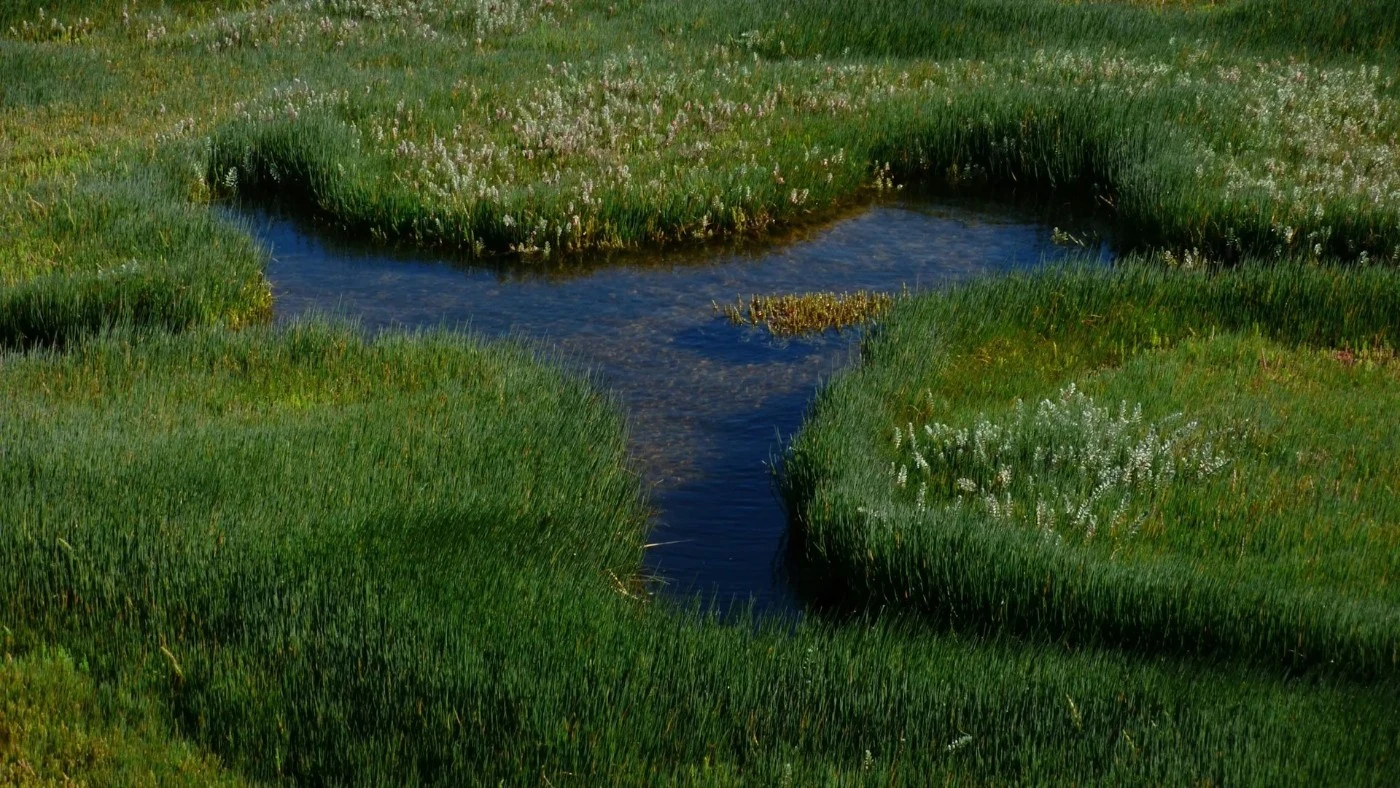 Riparian buffers are a key to ecosystem restoration / Image Credit Shane Monarc On Unsplash
As demonstrated in communities like West Plains, WA, where grassroots groups like the West Plains Water Coalition are actively mobilized to hold major institutions accountable for PFAS contamination, turning the tide is both urgent and achievable.
Realizing long-term water security requires an unyielding, synchronized commitment to all four pillars:
In Brief: Four Pillars Of Reversing A Water Crisis
Military & Industrial Accountability: Mandating the total elimination of fluorinated firefighting foams (AFFF), enforcing zero-discharge closed-loop wash racks, fully funding base remediation, and ending perpetual conflict to halt global watershed destruction.
Agricultural Regeneration: Retiring wasteful flood irrigation in favor of micro-drip networks, while phasing out toxic petrochemical packages like glyphosate to rebuild soil sponges through regenerative agriculture.
Urban Grid Modernization: Closing the municipal utility capital deficit, replacing fragile centralized pipe networks, and scaling decentralized green infrastructure to prevent catastrophic sewage collapses.
Ecological Buffer Restoration: Deploying nature’s biological filters—floating treatment wetlands, riparian vegetation, and re-meandered floodplains—to continuously purify water, degrade complex toxins, and recharge depleted aquifers naturally.
The answers are right here. Now, we just need to take action. It's as easy as noticing that our systems live within the ecosystem - and ecosystem restoration is a good thing, deserving of our attention.
Turning the global water crisis around does not depend on waiting for speculative future technologies. By forcing institutional accountability, re-organizing agriculture, upgrading urban infrastructure, and re-wilding natural hydrologic buffers, humanity will secure abundant, clean water for generations to come.
It all comes down to us - locust or butterfly - we choose.
A Deeper Look At The Issue - Video
Investigative journalist and filmmaker Abby Martin joins Chris Hedges to expose the world’s single largest institutional polluter: the U.S. military. Grounded in her groundbreaking documentary Earth’s Greatest Enemy, this interview lays bare how the war machine generates unquantifiable toxic waste, contaminates groundwater with PFAS, and drives global environmental destruction while evading climate accountability.
Related Articles
The Broken Water Pipes: Collapsing Water Infrastructure Beneath Your Feet
Donald Wood has driven to Vicksburg to take a shower more times than he can count. Thirty minutes each...
America’s WATER UPRISING
Emily Marpe was standing in her driveway in Petersburgh, New York, when the health department called. She...

The HEALING WATER We Lost: The Ancient Science of Balneotherapy
Marta Kovács is 61 years old, a retired school administrator from Budapest, and she has been going...